

Recently, both United States President Donald Trump and Canadian Prime Minister Mark Carney have used icebreaker numbers as talking points amid U.S.-Canada trade tensions and Arctic competition. Their recent comments mix accurate observations about fleet sizes with exaggeration, imprecise counting, and rhetorical jabs.
Truthfully, Canada does operate a significantly larger icebreaking fleet than the United States, particularly for domestic and seasonal Arctic work, while both countries are in the midst of major recapitalization programs that will add new polar-capable ships in the 2030s.
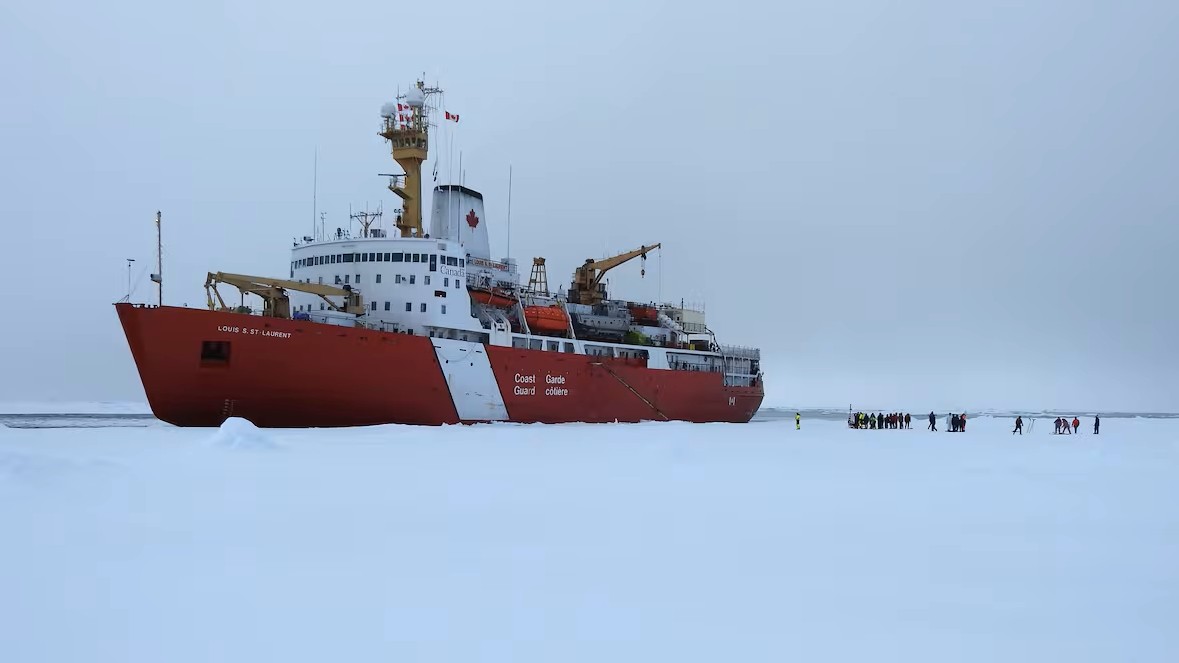
The Canadian Coast Guard currently operates 19 icebreakers of varying capability, according to recent government and fleet descriptions. These include two heavy icebreakers (CCGS Louis S. St-Laurent and CCGS Terry Fox), seven medium icebreakers, and additional high- and medium-endurance multi-tasked vessels whose primary roles include icebreaking on the St. Lawrence River, Great Lakes, Atlantic coast, and Arctic waters in summer. The Coast Guard also operates four air-cushioned vehicles (hovercraft) used for icebreaking. During winter, 19 icebreakers plus two hovercraft typically work southern Canadian waters; in summer an average of seven vessels deploy to the Arctic.
These figures exclude the Royal Canadian Navy’s six Harry DeWolf-class Arctic and Offshore Patrol Ships, which have icebreaking capability (Polar Class 5) but are primarily patrol vessels rather than dedicated icebreakers. Two additional ice-capable Arctic and Offshore Patrol Ships are being acquired for the Coast Guard itself.
Canada’s renewal program is large. Two polar icebreakers, CCGS Arpatuuq and CCGS Imnaryuaq, are under construction. Steel cutting and production have begun at Seaspan’s Vancouver Shipyards and at Davie facilities in Quebec and Finland’s Helsinki Shipyard. Deliveries are planned for 2030 and 2032; these Polar Class 2 ships are intended for year-round Arctic operations. On August 24, 2026, the government awarded Chantier Davie a design-and-build contract worth more than $11 billion for six Program Icebreakers to replace aging heavy and medium ships. Construction is scheduled to start in 2027, with the first ship expected around 2032 and the class complete by 2038. Seaspan is also in the design and pre-construction phase for up to 16 multi-purpose icebreakers, with first delivery targeted for 2030.
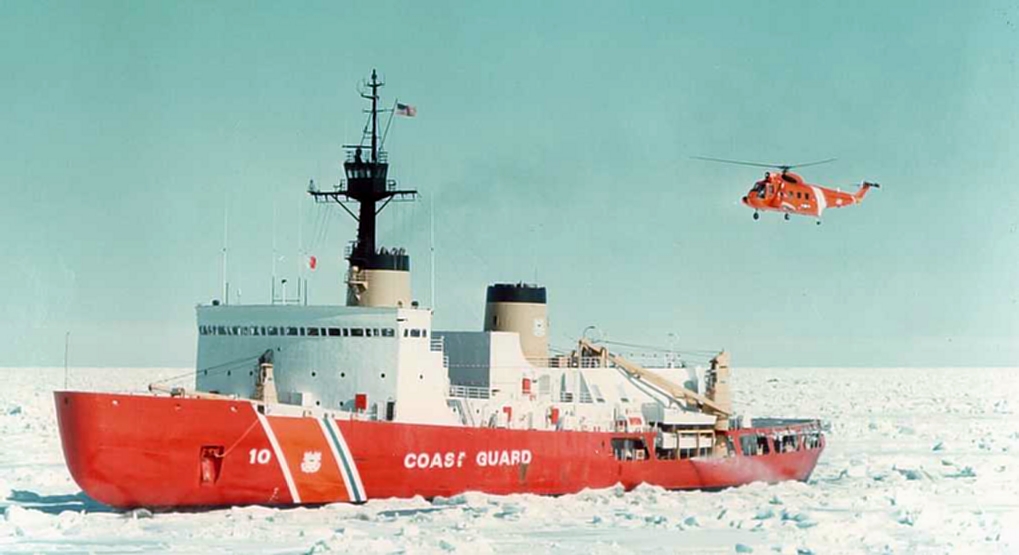
The United States Coast Guard’s polar icebreaker fleet is much smaller. It currently operates three ships: the heavy icebreaker USCGC Polar Star (commissioned 1976), the medium icebreaker USCGC Healy (2000), and the medium icebreaker USCGC Storis (a converted commercial vessel commissioned in 2025). The sister ship Polar Sea remains inactive. These three vessels handle Arctic and Antarctic missions, including the annual resupply of McMurdo Station.
The U.S. also maintains a substantial domestic icebreaking force focused on the Great Lakes and East Coast waterways. This includes the Great Lakes heavy icebreaker USCGC Mackinaw, nine 140-foot Bay-class icebreaking tugs, and a larger number of ice-capable buoy tenders and smaller cutters. Official descriptions have placed the domestic icebreaking fleet at more than 20 dedicated or ice-capable assets when light icebreakers and tenders are included. These ships keep Great Lakes and coastal shipping lanes open in winter but lack the polar endurance and ice class of the dedicated polar fleet.
U.S. construction is accelerating. The Polar Security Cutter program aims to deliver three new heavy polar icebreakers. The first, Polar Sentinel, is under construction at Bollinger Mississippi Shipbuilding, with module work underway; current estimates put delivery in the early 2030s. The Arctic Security Cutter program plans 11 new medium icebreakers. Contracts covering all 11 have been awarded or finalized in 2025–2026 to Bollinger, Finland’s Rauma Marine Constructions, and Davie Defense (using yards in Finland and Texas). Steel cutting and early construction have started on multiple hulls. The first deliveries are scheduled for 2028, with the initial six expected by 2031 and the remainder stretching into the mid-2030s. The program is intended to produce a future polar fleet of up to 11 ships once older vessels retire.
Direct numerical comparisons require care. Canada’s 19 Coast Guard icebreakers include many multi-mission vessels optimized for seasonal work in first-year ice on the St. Lawrence and Great Lakes, plus summer Arctic resupply. The U.S. polar trio is smaller but includes one of the world’s most capable heavy icebreakers (Polar Star) and is now being supplemented by a new medium ship. Both nations are building new Polar Class vessels and have signed the ICE Pact with Finland to share design and construction expertise. Canada’s current numerical advantage in operational icebreakers is real and reflects its longer ice-affected coastline and year-round commercial traffic on the St. Lawrence Seaway. The United States is investing heavily to close the polar-capability gap over the next decade.
