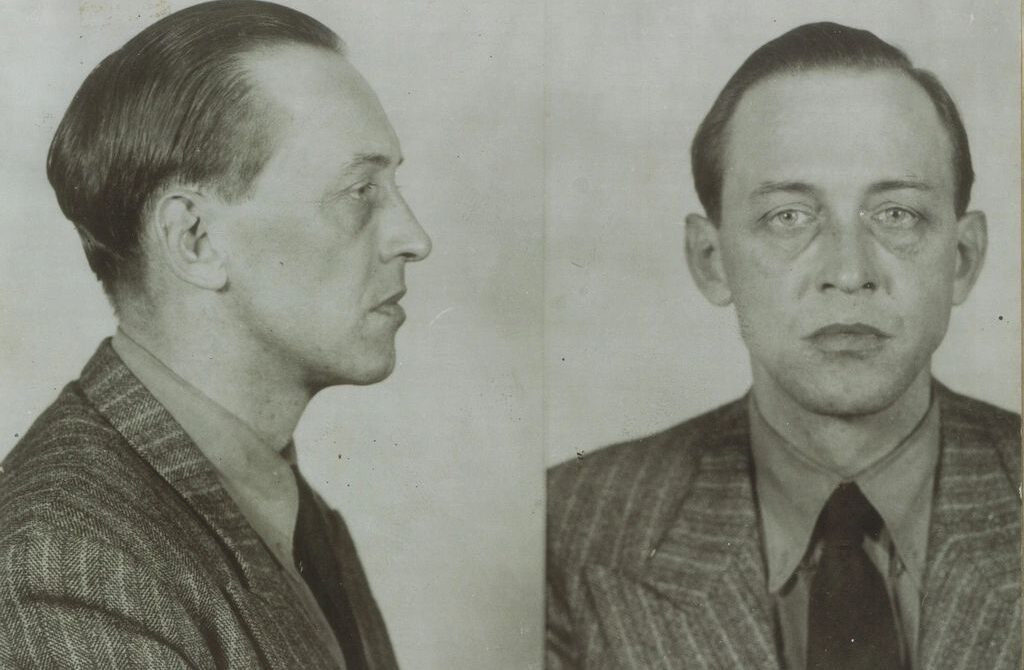
On the night of November 8-9, 1942, the German submarine U-518 surfaced in the dark waters of Chaleur Bay off the Gaspé Peninsula in Quebec. Crew members launched a dinghy and rowed a lone passenger ashore roughly four miles west of the small town of New Carlisle. The man was Werner Alfred Waldemar von Janowski, a 38-year-old German intelligence operative. Within roughly 12 hours of stepping onto Canadian soil, he was under arrest, and his espionage career was one of the shortest and most inept of the Second World War.
Background and Mission
Born around 1903 or 1904 in Allenstein, East Prussia (today Olsztyn, Poland), Janowski had prior experience in Canada. He immigrated in 1930 and lived for several years in Ontario, including the village of Ailsa Craig near London, where he worked as a day labourer and construction worker. He was remembered locally as outspokenly patriotic about Germany, with stories of minor family nobility and a father who had been a colonel in the First World War. He married a Canadian woman in Toronto; the relationship was troubled, and he returned to Germany around 1938.
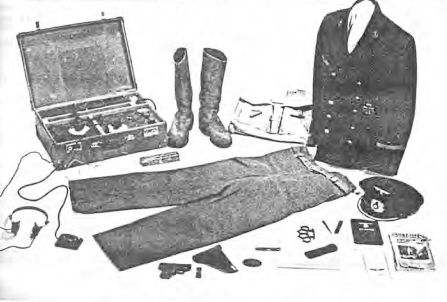
By 1942 he had been trained by the Abwehr (German military intelligence) in espionage and sabotage. His mission was to reach Montreal, contact Canadian fascist sympathizers (notably Adrien Arcand, the self-styled “Canadian Führer” of the National Unity Party, who was in fact already interned for the duration of the war), assess the potential for pro-Nazi activity or unrest, and report back via radio. Abwehr planners appear to have operated on outdated or optimistic assumptions about the strength of Canadian fascist sentiment. He was issued Canadian and U.S. currency (some of it outdated), a radio transmitter-receiver, a pistol, brass knuckles, maps, coding materials, and identity documents under the alias William Brenton, a Toronto radio salesman. He also carried a German naval uniform so that, if caught, he could claim to be a deserter rather than a spy.
The Landing and First Hours
U-518, a Type IXC boat under Kapitänleutnant Friedrich-Wilhelm Wissmann, had crossed the Atlantic without major incident. In the early hours of 9 November, it put Janowski ashore by dinghy. He buried his naval uniform on the beach, changed into civilian clothes (a grey turtleneck and tweed suit), and waited until dawn. Rather than immediately heading for the railway tracks toward Montreal as instructed, he walked into New Carlisle seeking a bath and rest after more than a month aboard the submarine.
Unfortunately for Janowski, he underestimated how curious a small-town hotel clerk could be.
Around 6:30 AM, Janowski checked into the Hotel New Carlisle under the name William Brenton and requested a room with a bath. The young hotel clerk, Earle J. Annett, quickly grew suspicious. Janowski claimed to have arrived by bus that morning and walked to the hotel, but no such bus service operated at that hour… and Annett knew that the bus stop was actually in front of the hotel.
The fact that Janowski paid with obsolete Canadian banknotes no longer in circulation and smoked cigars with European wrappers and lit them with Belgian matches made Annett even more suspicious. To top it off, Janowski smelled strongly of diesel fuel (from the U-boat), had an accent, and had a demeanour that seemed off.
A triggered Annett contacted the local police. When Janowski left the hotel to catch a Canadian National Railway train to Montreal, Constable Alfonse Duchesneau of the Sûreté du Québec boarded the train just as it left the station. When confronted, Janowski initially stuck to his cover story as a Toronto radio salesman.
When Duchesneau asked to search his luggage, Janowski abandoned the pretence. According to accounts of the moment, he confessed, saying, “Searching my luggage won’t be necessary. I am a German officer who serves his country as you serve yours.”
Janowski’s luggage contained a powerful radio transmitter-receiver, a loaded 25-calibre pistol, spiked brass knuckles, thousands of dollars in currency, and other spy equipment. He was arrested without resistance.
Canadian forces later searched Chaleur Bay extensively with the warship HMCS Burlington and RCAF aircraft but did not locate U-518, which had already departed. The submarine’s captain had noted in the log his confidence that the agent had made it ashore successfully under what appeared to be peacetime conditions, an assessment that proved completely wrong.
Double Agent and Aftermath
The Royal Canadian Mounted Police took custody of Janowski and, following the British model of “turning” captured enemy agents, attempted to run him as a double agent under the codename Watchdog (Operation Watchdog). He was held under relatively loose supervision in Montreal and transmitted selected (largely fabricated) information back to his Abwehr handlers in Hamburg, including misleading reports on Canadian naval movements. The operation produced little of real value. The RCMP lacked experience with double-agent handling, coordination with British intelligence was imperfect, and there were suspicions (never substantiated by hard evidence) that Janowski might have been a triple agent feeding information back to Germany. After roughly a year the effort was shut down.
In late August 1943 Janowski was transferred to England and held at Camp 020 for the rest of the war. In July 1945 he was repatriated to an internment camp in the British zone of Germany and released in 1947. With East Prussia now part of Poland and most of its German population expelled, he had no home to return to. He later worked as a translator and, in the 1960s, for the German Navy. He died on 22 February 1978 in Benissa, Alicante, Spain, while on holiday.
Legacy
Janowski’s case is frequently cited as an example of extraordinarily poor tradecraft and often labelled as the “world’s worst Nazi spy.” Alert local civilians and police in a small Quebec town, combined with his series of elementary mistakes (outdated money, European personal effects, an unnecessary hotel stop, and an immediate confession), ended the mission almost before it began. For the RCMP, the episode provided early, if imperfect, experience in running a double agent that proved useful when Soviet cipher clerk Igor Gouzenko defected in Ottawa in 1945. The story also highlights the reach of the Battle of the Atlantic into Canadian coastal communities and the Abwehr’s sometimes unrealistic assessments of conditions abroad.