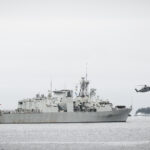
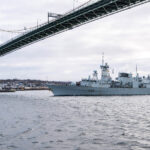
In a rapidly evolving geopolitical landscape, Rear Admiral David Patchell, the commander of Canada’s Pacific naval fleet, has underscored the critical need for expedited procurement of new submarines. Assuming command in August 2025, Patchell’s recent statements highlight the operational shortcomings of the current fleet and the pressing threats in the Indo-Pacific region. As global tensions rise, particularly with increased activities from adversaries like China and Russia, Patchell advocates for a swift transition to a modern underwater force to ensure Canada’s maritime sovereignty and deterrence.
Canada’s submarine capabilities are anchored by the Victoria-class vessels, a fleet of four diesel-electric submarines acquired second-hand from the United Kingdom in 1998 for approximately $750 million. These submarines, originally built in the 1980s and 1990s, have served the Royal Canadian Navy (RCN) for over two decades but are now plagued by age-related issues and high maintenance costs. Billions have been invested in upkeep since their acquisition, yet operational readiness remains a challenge.
Currently, the fleet faces significant limitations. For instance, HMCS Corner Brook is undergoing extended maintenance in drydock, while HMCS Chicoutimi primarily serves as a training platform rather than an active operational asset. Reports indicate that Canada has only one fully operational submarine at present, exacerbating gaps in underwater surveillance and response capabilities. Patchell has openly acknowledged these deficiencies, stating that the shortcomings are “well known” within naval circles and that the Victoria-class submarines are slated for retirement in the coming decade.
These constraints are compounded by broader recruitment challenges in the RCN. The navy is short approximately 2,000 trained regular-force sailors—about a quarter of its benchmark of 7,700 personnel—including 1,000 naval technicians essential for repairs and operations. This staffing shortfall not only hampers the deployment of existing vessels but also poses risks as Canada integrates new ships, such as destroyers and Arctic patrol vessels, into its fleet.
In recent discussions, Patchell has been unequivocal about the priority of submarine acquisition. When asked what single capability he would add to his fleet if resources allowed, he responded: “12 brand-new submarines.” He emphasized that such a fleet would provide a “persistent, lethal deterrent” against emerging threats, particularly to undersea infrastructure like communication cables and pipelines. Patchell’s sense of urgency stems from the recognition that adversaries are increasingly active in probing Canada’s western and Arctic approaches.
The Pacific Ocean hosts nearly 300 submarines, the highest concentration globally, with Chinese and Russian vessels playing prominent roles. This buildup raises alarms about sovereignty, especially in the Arctic, where melting ice opens new shipping routes and resource opportunities. Retired Major-General David Fraser has warned that tensions with China and Russia are nearing a “tipping point,” as these nations challenge Canadian territorial claims. Patchell, drawing from his experience as former vice commander of the U.S. Second Fleet, stresses the importance of strong military alliances amid uncertainties in U.S.-Canada relations, noting that military-to-military ties remain robust.
To address these gaps, the Canadian government has outlined plans to acquire up to 12 new conventionally powered submarines through a competitive bidding process. The contract is expected to be awarded by 2028 at the latest, with the first delivery targeted no later than 2035. This multibillion-dollar initiative aims to replace the aging Victoria-class and enhance Canada’s underwater presence in both the Pacific and Arctic.
The competition has narrowed to two primary contenders: South Korea’s Hanwha Oceans and Germany’s ThyssenKrupp Marine Systems (TKMS). Patchell has expressed a pragmatic preference, favoring “whichever one I can get in this harbour as soon as possible.” Both companies are tailoring their proposals to Canadian needs. TKMS has partnered with Canadian AI firm Cohere to incorporate advanced data management and AI-driven decision-making tools, aiming to reduce the cognitive load on sailors. Hanwha, meanwhile, has established Hanwha Defence Canada in Ottawa, led by a former naval officer, and is collaborating with Babcock Canada for long-term maintenance and sustainment.
Innovations in naval technology, such as increased automation and uncrewed vehicles, are also part of the strategy to mitigate crewing challenges. For example, newer Arctic and Offshore Patrol Ships require fewer than 50 sailors, compared to around 225 for Halifax-class frigates.
Patchell’s call for rapid submarine procurement reflects a broader shift in Canada’s defence posture amid heightened global unrest. With adversaries expanding their underwater fleets and testing international boundaries, a modernized RCN submarine force is seen as essential for deterrence, surveillance, and protection of critical infrastructure. However, success will depend on overcoming recruitment hurdles and ensuring timely delivery from the selected supplier.