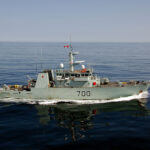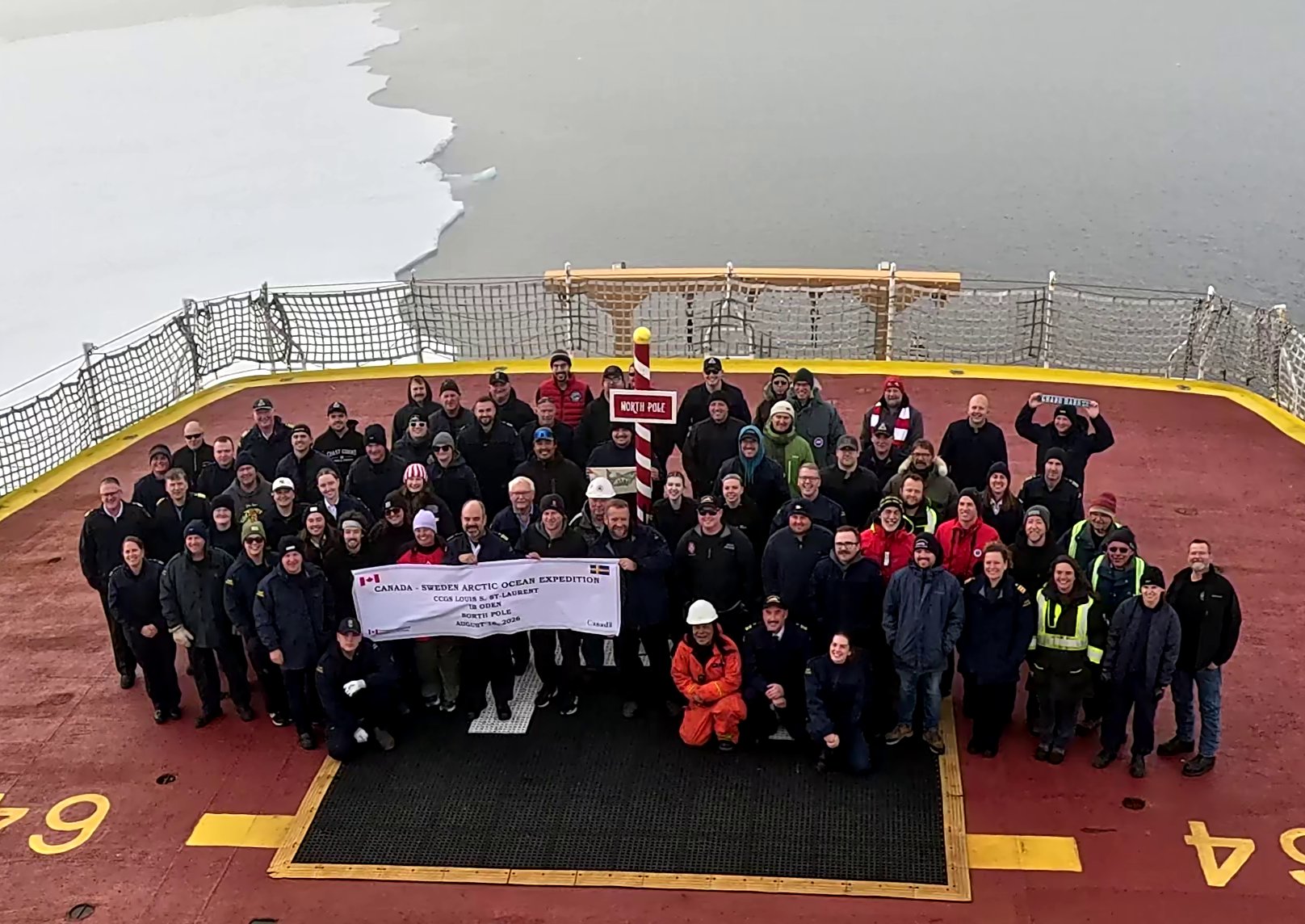
Ottawa, August 17, 2026 — The Canadian Coast Guard Ship (CCGS) Louis S. St-Laurent, Canada’s largest and most powerful icebreaker, reached the North Pole on August 16, 2026, during its Arctic summer deployment.
The achievement forms part of ongoing scientific missions running from 2024 to 2027. The vessel is collecting high-resolution geoscience and hydrographic data to help define Canada’s continental shelf and map its outer limits under the United Nations Convention on the Law of the Sea (UNCLOS). The work supports Natural Resources Canada and Fisheries and Oceans Canada.
Officials described the transit as a demonstration of Canada’s ability to operate safely and effectively in one of the world’s most demanding environments while advancing national interests in the Arctic. Canadian Coast Guard icebreakers rank among the most capable in the world and are crewed by highly experienced personnel able to reach remote Arctic areas. Through sustained operations in northern waters, the Coast Guard reinforces Canada’s sovereignty and security.
The Honourable David J. McGuinty, Minister of National Defence, stated: “The arrival of CCGS Louis S. St-Laurent at the North Pole is an important milestone that reflects Canada’s enduring commitment to the Arctic. Supported by the expertise of Canadian Coast Guard personnel, this mission advances scientific knowledge, strengthens our presence in the North, and reinforces Canada’s sovereignty and security.”
Kevin Brosseau, Senior Associate Deputy Minister of National Defence, Commissioner of the Canadian Coast Guard, and Canada’s Fentanyl Czar, added: “Reaching the North Pole reflects the professionalism and dedication of the crew of CCGS Louis S. St-Laurent and everyone who supports our Arctic operations. Our icebreakers enable the Canadian Coast Guard to operate safely and effectively in Canada’s Arctic, supporting northern communities, scientific research, and Government of Canada priorities across the North.”
The Louis S. St-Laurent has a long history of polar operations. It became the first Canadian surface vessel to reach the North Pole in August 1994 and returned in 2014. Commissioned in 1969, the heavy icebreaker has undergone multiple upgrades and remains the largest vessel in the current Coast Guard icebreaking fleet. Canada is simultaneously advancing construction of new polar-class icebreakers under the National Shipbuilding Strategy to enhance future capabilities.
The Canadian Coast Guard’s annual Arctic summer season runs from June to November. During this period, icebreakers support Northern communities, deliver essential services, and enable Government of Canada scientific and sovereignty missions across the region.
This latest North Pole transit underscores both the operational reach of Canada’s icebreaking fleet and the country’s ongoing scientific efforts to assert and document its Arctic maritime interests.
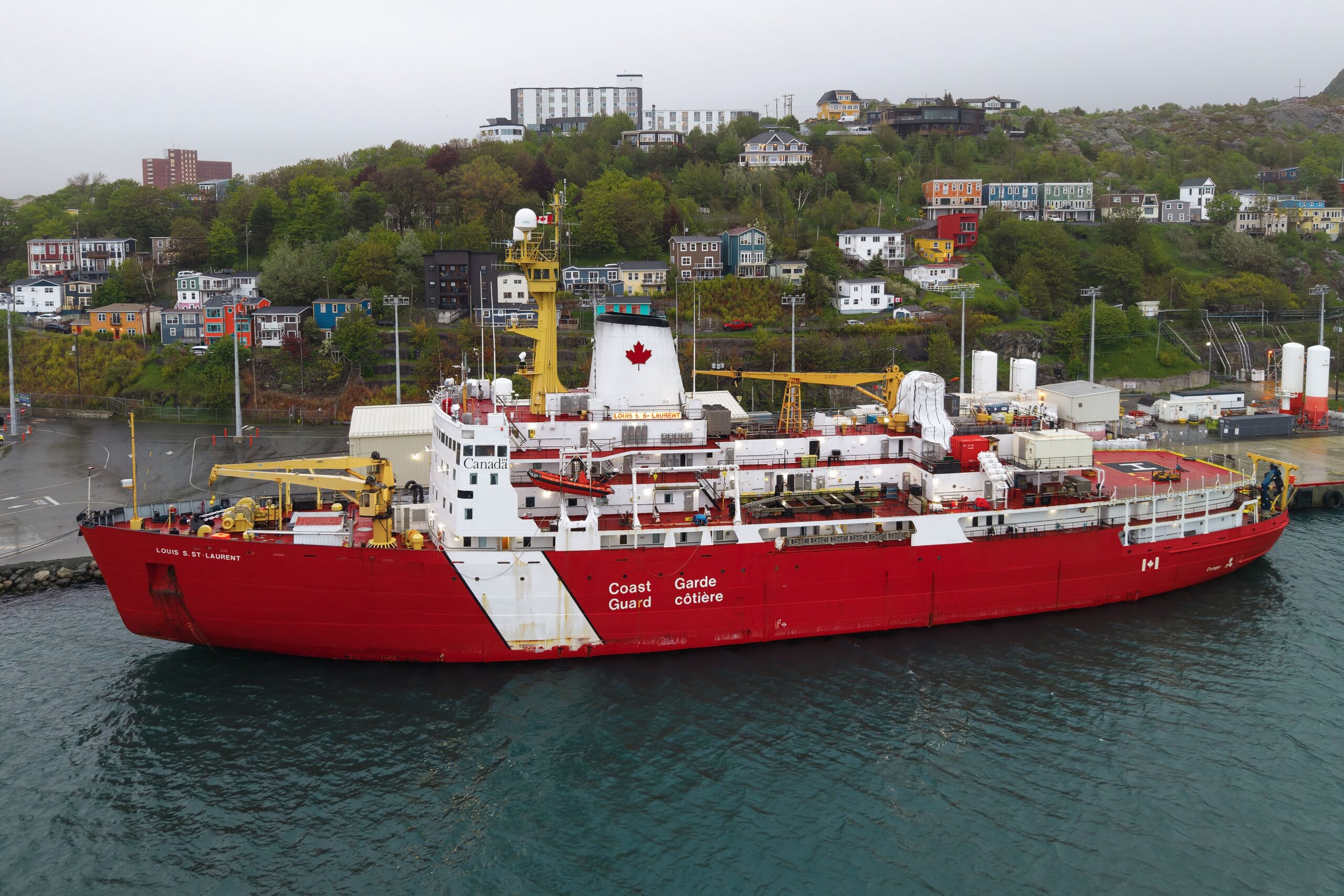
(Wikimedia Commons)