

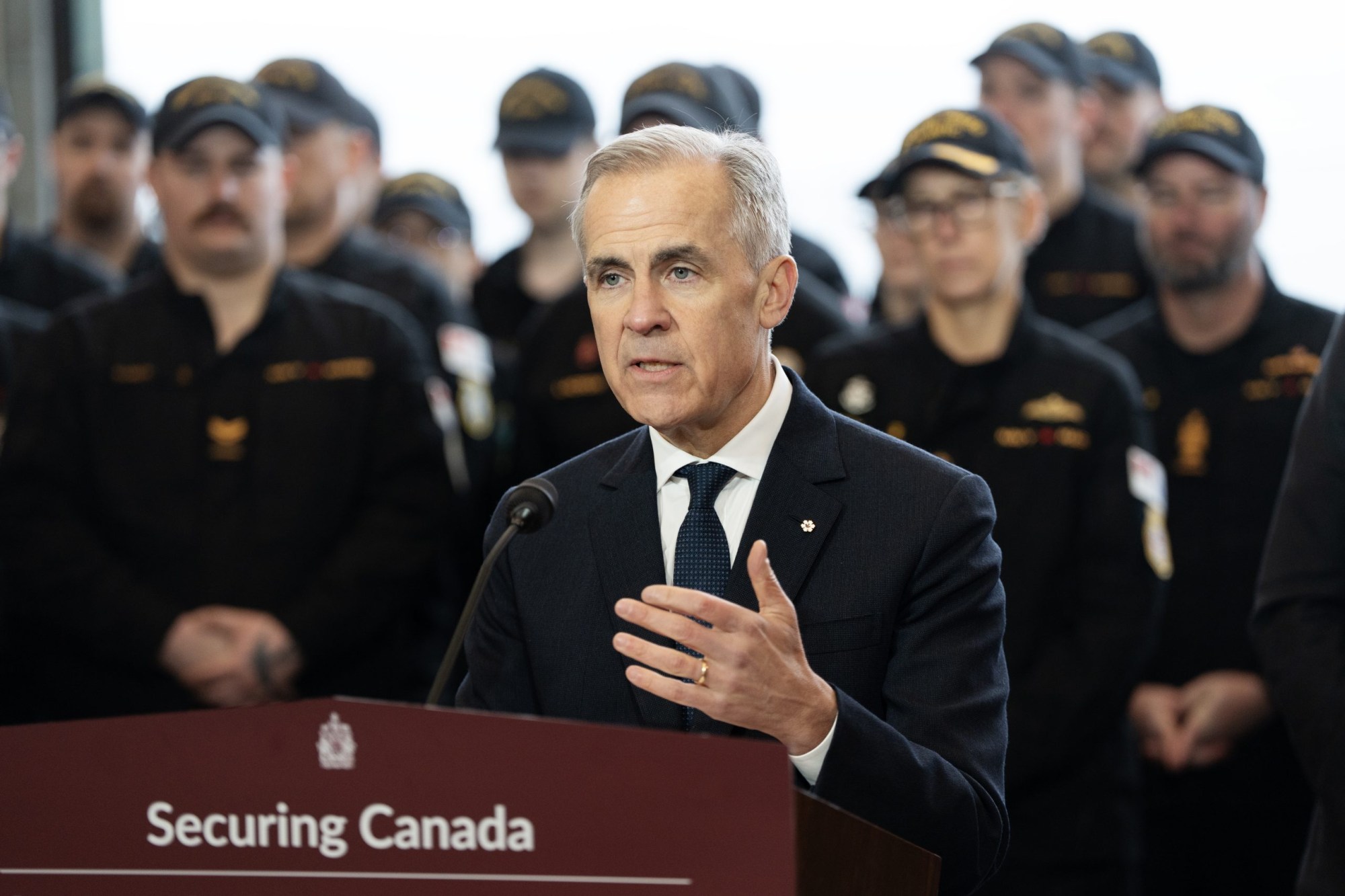
Halifax, Nova Scotia – March 27, 2026 – In a significant milestone for Canadian defence policy, Prime Minister Mark Carney announced on Thursday that Canada has officially achieved NATO’s 2% of GDP defence spending target – half a decade ahead of the previous government’s schedule. The announcement was made during a news conference aboard HMCS Margaret Brooke, an Arctic and offshore patrol ship of the Royal Canadian Navy, at HMC Dockyard Halifax.
The declaration aligns with the Canadian government’s official press release issued the same day from Halifax, titled “Prime Minister Carney announces Canada has achieved the NATO 2% defence spending target.” The release details how, in response to a “more dangerous and divided world,” the government has accelerated investments to rebuild, rearm, and reinvest in the Canadian Armed Forces. Over the past 10 months, this has involved spending more than $63 billion – the largest year-over-year increase in generations – across more than a dozen federal departments and agencies.
“Canada has achieved the 2% defence expenditure target,” the release states, calling it “a foundation for an even stronger, more independent, more secure country.” Prime Minister Carney emphasized the shift in his quoted remarks: “In moments of crisis, when people see the Maple Leaf on a sleeve, they see hope. They get help. Canada’s new government made a promise to rebuild, rearm, and reinvest in the Canadian Armed Forces – and we’re getting it done. In this more fractured and darker world, Canadian leadership will be defined not just by the strength of our values, but also by the value of our strength.”
The press release also unveiled more than $3 billion in new infrastructure and defence-related investments across Atlantic Canada, with the majority directed to Nova Scotia and New Brunswick. These targeted projects aim to modernize bases, support next-generation naval and air fleets, expand training, and improve housing for service members.
Key investments in Nova Scotia include:
- $1.2 billion to modernize critical power and municipal service infrastructure at CFB Halifax Dockyard and Stadacona.
- $648 million to construct two new aviation support facilities at 14 Wing Greenwood, backing the Royal Canadian Air Force’s CP-8A Poseidon fleet and CQ-9B Guardian drones.
- Over $180 million to build the Combatant Training and Integration Centre for the Royal Canadian Navy’s future River-class destroyers.
- $82.5 million to acquire Halifax Gate, a 475-acre waterfront industrial site to support naval operations, personnel movement, ships, and supplies.
- $60 million for a new 140-unit apartment complex near 12 Wing Shearwater to provide quality housing for Canadian Armed Forces members.
In New Brunswick, the package includes more than $1 billion for upgrades to the CFB Gagetown Range and Training Area (including new ground-based air defence systems) and $20.2 million to upgrade transition centres for service members moving to civilian life.
These announcements build on a four-pillar defence strategy: investing in personnel, equipment, and infrastructure; expanding military capabilities; strengthening Canada’s defence industry; and diversifying international partnerships. Looking ahead, the government plans half a trillion dollars in defence spending over the next decade, covering submarines, aircraft, drones, sensors, and radar systems. Supporting this are the Defence Investment Agency (launched in October 2025 to streamline procurement) and Canada’s first-ever Defence Industrial Strategy (announced in February 2026).
The move also advances Canada toward a newer, more ambitious NATO Defence Investment Pledge from the 2025 Summit in The Hague: 5% of GDP by 2035 (3.5% on core defence and 1.5% on related security investments). Minister of National Defence David J. McGuinty described the 2% achievement as “a foundational step in renewing Canada’s defence and a clear statement of resolve in a more dangerous world.”
Atlantic Canada’s defence sector, which already accounts for about 20% of national defence industry employment, stands to benefit significantly. Minister Sean Fraser, responsible for the Atlantic Canada Opportunities Agency, noted that the region “has always punched above its weight when it comes to defending Canada.”
By making the announcement directly on a Navy vessel in Halifax – home to Canada’s largest military base – Prime Minister Carney delivered a symbolic and practical message: Canada is not only meeting its international commitments but is actively preparing its forces and infrastructure for the challenges ahead. The press release underscores that these investments are about sovereignty, alliance reliability, and economic growth, positioning Canada to “protect our sovereignty, secure our continent, and reinforce our role among Allies.”
As global security dynamics evolve, Thursday’s events aboard HMCS Margaret Brooke and the accompanying government press release mark a clear turning point in Canada’s long-term defence posture.
