

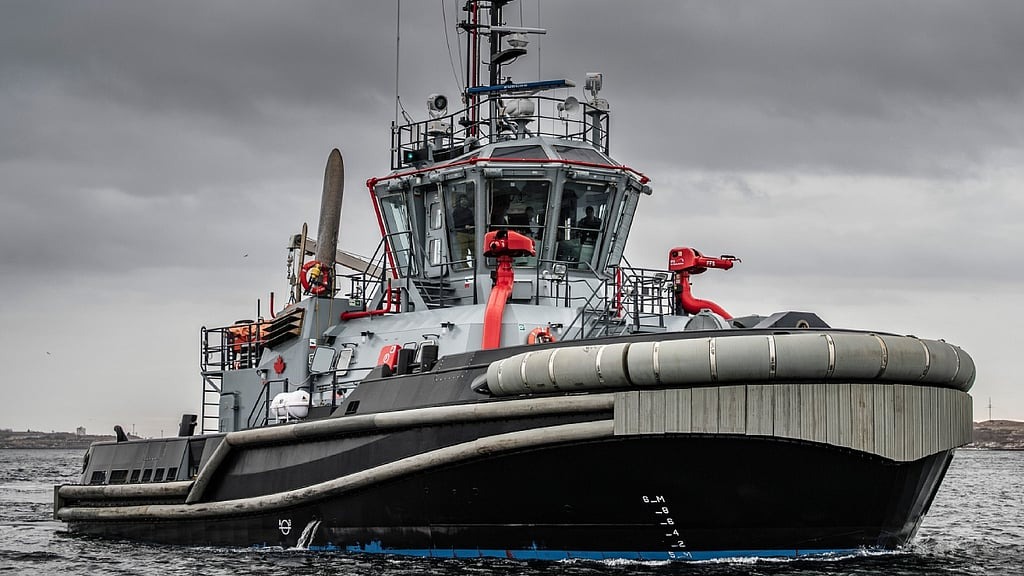
Halifax, Nova Scotia — February 28, 2026 – The Royal Canadian Navy (RCN) took another major step forward in modernizing its harbour and coastal support capabilities yesterday as the Department of National Defence officially accepted its third Naval Large Tug, Canadian Forces Auxiliary Vessel (CFAV) Canso.
On behalf of Defence Minister the Honourable David J. McGuinty, the Honourable Lena Metlege Diab, Minister of Immigration, Refugees and Citizenship, visited Canadian Forces Base Halifax to mark the milestone and highlight the government’s commitment to the RCN’s growing fleet.
CFAV Canso completed a demanding delivery voyage in 2025, sailing more than 1,000 nautical miles from the Ocean Industries Inc. shipyard in Îsle-aux-Coudres, Quebec, to Halifax. Ownership will transfer to the RCN once crew training is complete, expected in March 2026. It is the first of the new class to join the East Coast fleet, with sister vessel Stella Maris scheduled to arrive in November 2026.
In August 2024, the first two tugs, CFAV Haro and CFAV Barkerville, were delivered to the West Coast fleet in Esquimalt, British Columbia.
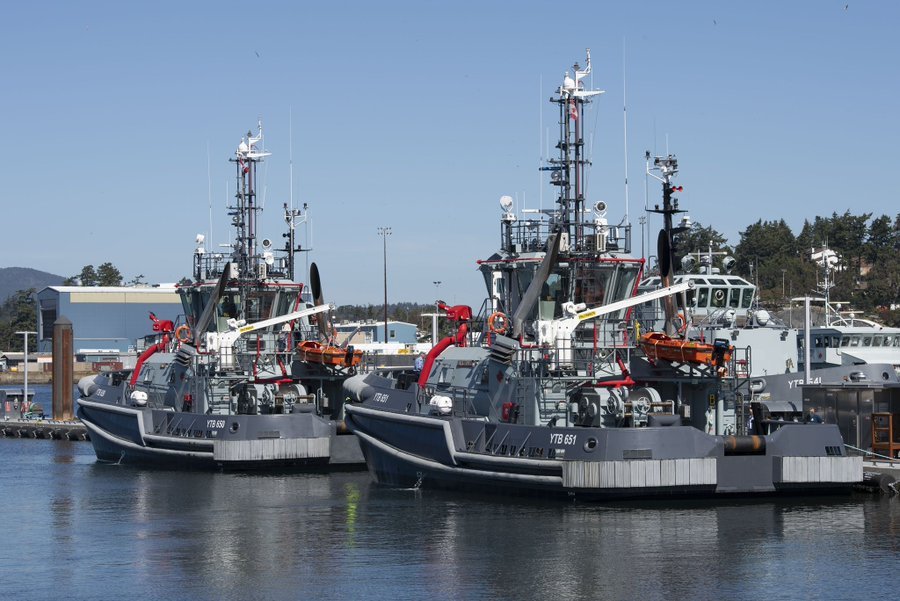
These powerful 24-metre-long, 11-metre-wide vessels, each with a six-person crew, are designed to perform critical harbour-berthing, coastal towing, and harbour firefighting duties. As the RCN introduces new classes of ships — including the Harry DeWolf-class Arctic and Offshore Patrol Vessels, Protecteur-class Auxiliary Oiler Replenishment ships, and upcoming River-class destroyers — the demand for reliable auxiliary support is rising sharply.
To meet that demand, the Government of Canada amended its contract with Ocean Industries Inc. in December 2025, adding $81 million (including taxes) for a total value of $213.45 million. The amendment brings the total order to six Naval Large Tugs — three for each coast — replacing the aging Glen-class tugs and Fire-class fireboats that are reaching the end of their service lives.
The two newest vessels will be named CFAV Sansum (after Sansum Narrows in British Columbia) and CFAV Belle Isle (after the Strait of Belle Isle between Newfoundland and Labrador), continuing the tradition of naming these tugs after historically significant Canadian straits.
“Keeping with the naming tradition for Naval Large Tugs in the RCN, the two additional tugs are also named after straits,” the release noted. “Naming Naval Large Tugs after straits commemorates the symbolic similarities in function between waterways and tugs, with both providing safe maritime passage and manoeuvrability.”
Once all six vessels are operational, the RCN will enjoy built-in redundancy, ensuring harbour support remains available even during maintenance periods and significantly boosting overall fleet readiness.
The expanded project will also sustain 40 to 60 skilled jobs at the Quebec shipyard, supporting Canada’s marine industry under the National Shipbuilding Strategy.
Key quotes from the announcement:
“The strength of our naval fleet is not defined by its largest warships alone. The security of our oceans depends on the steadfast contribution of every vessel that keeps our fleet moving and our sailors safe. Our Naval Large Tugs are fundamental to that mission.”
— The Honourable David J. McGuinty, Minister of National Defence
“Built under the National Shipbuilding Strategy, the Naval Large Tugs are an important investment to support the navy’s future capabilities and Canada’s marine industry. With today’s acceptance into the fleet of CFAV Canso and the announcement of two additional tugs… we’re making sure our sailors have the advanced and reliable vessels they need to protect Canada’s interests at home and abroad for decades to come.”
— The Honourable Stephen Fuhr, Secretary of State (Defence Procurement)
“The arrival of CFAV Canso strengthens Maritime Forces Atlantic’s ability to safely support naval operations on the East Coast… Though operating behind the scenes, CFAV Canso will play a vital role in sustaining operations and supporting the RCN’s long-term mission in the Atlantic.”
— Rear-Admiral Josée Kurtz, Commander Maritime Forces Atlantic and Commander Joint Task Force Atlantic
With the Naval Large Tug project now expanded to six vessels, the Royal Canadian Navy is ensuring its surface fleet has the robust, modern auxiliary support it needs well into the future — a quiet but essential backbone for Canada’s maritime defence.

Wonderful additions to the the fleet.