
HMCS YELLOWKNIFE (706)
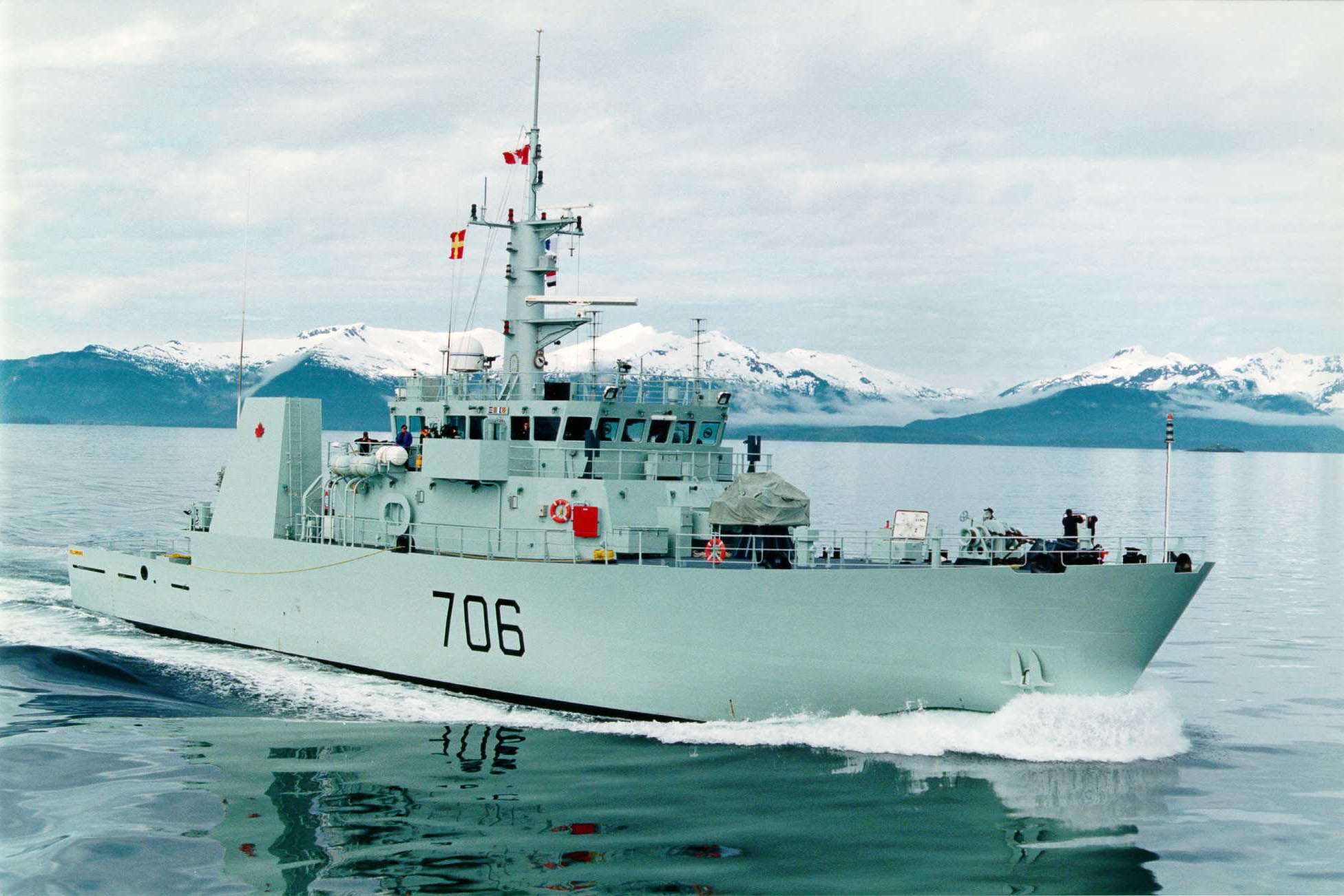
HMCS YELLOWKNIFE
The History of HMCS YELLOWKNIFE
HMCS Yellowknife (MM 706) is the seventh Kingston-class Maritime Coastal Defence Vessel and the first Royal Canadian Navy ship to be named after Yellowknife, Northwest Territories.
She was laid down at Halifax Shipyards on 7 November 1996 and launched on 5 June 1997. The ship was accepted by the Navy on 16 October 1997 and left Halifax on 30 January 1998, being commissioned at Esquimalt on 18 April 1998. Hms Whitehorse made a courtesy call to Skagway, Alaska next. On June 18, 1999 she was presented with the Freedom of the City of Yellowknife. Homeported for most of her life at CFB Esquimalt and crewed mostly by naval reservists, she was built for coastal patrol, mine countermeasures, training, fisheries and sovereignty work and search and rescue.
In October 2001, she was awarded a Canadian Forces Unit Commendation for towing the stricken fishing vessel Salmon King to safety in heavy weather. In 2002 she was one of the first Canadian warships in 25 years to work with the Mexican Navy. She reported illegal logging activity near Rivers and Hardy Inlets to the RCMP. She trained junior officers, patrolled fisheries and sovereignty and participated in task-group exercises with Canadian and French ships. In 2017 she sailed north on Operation Limpid aboard HMCS Edmonton. She also participated in RIMPAC in 2016 and 2018.
In 2014, the Bofors 40mm guns were taken off Canada's Kingston-class coastal defence vessel (MCDV) fleet, which then relied on two 12.7mm (0.50 calibre) Browning M2 heavy machine guns for self-defense.
She has become a regular on Operation CARIBBE in the eastern Pacific, with Brandon in 2014, Whitehorse in 2019 (2,657 kg of cocaine and 25 kg of marijuana intercepted), and Saskatoon in 2022 (872 kg of cocaine). After the Navy consolidated the remaining Kingston-class ships on the East Coast, she transferred to Halifax. She and HMCS Edmonton deployed with Standing NATO Mine Countermeasures Group 1 on Operation Reassurance in European waters in 2025, returning to Halifax that October.
She is one of four Kingston class ships remaining and is slated for decommissioning in 2026.
HMCS YELLOWKNIFE Statistical Data
- Pendant: 706
- Type: Maritime Coastal Defence Vessel
- Class: Kingston
- Displacement: 970 tonnes
- Length: 55.31 m / 181.5 ft
- Width: 11.3 m / 37 ft
- Draught: 3.4 m / 11 ft
- Speed: 15 kts
- Compliment: 31-36 Officers and Crew
- Arms: 1 - 40mm Bofors (removed in 2014), 2 - 12.7 mm (.50 cal) machine gun
- Builder: Halifax Shipyards Ltd., Halifax, NS
- Keel Laid: 07-Nov-96
- Date Launched: 05-Jun-97
- Date Commissioned: 18-Apr-98
- Paid off:
More Images
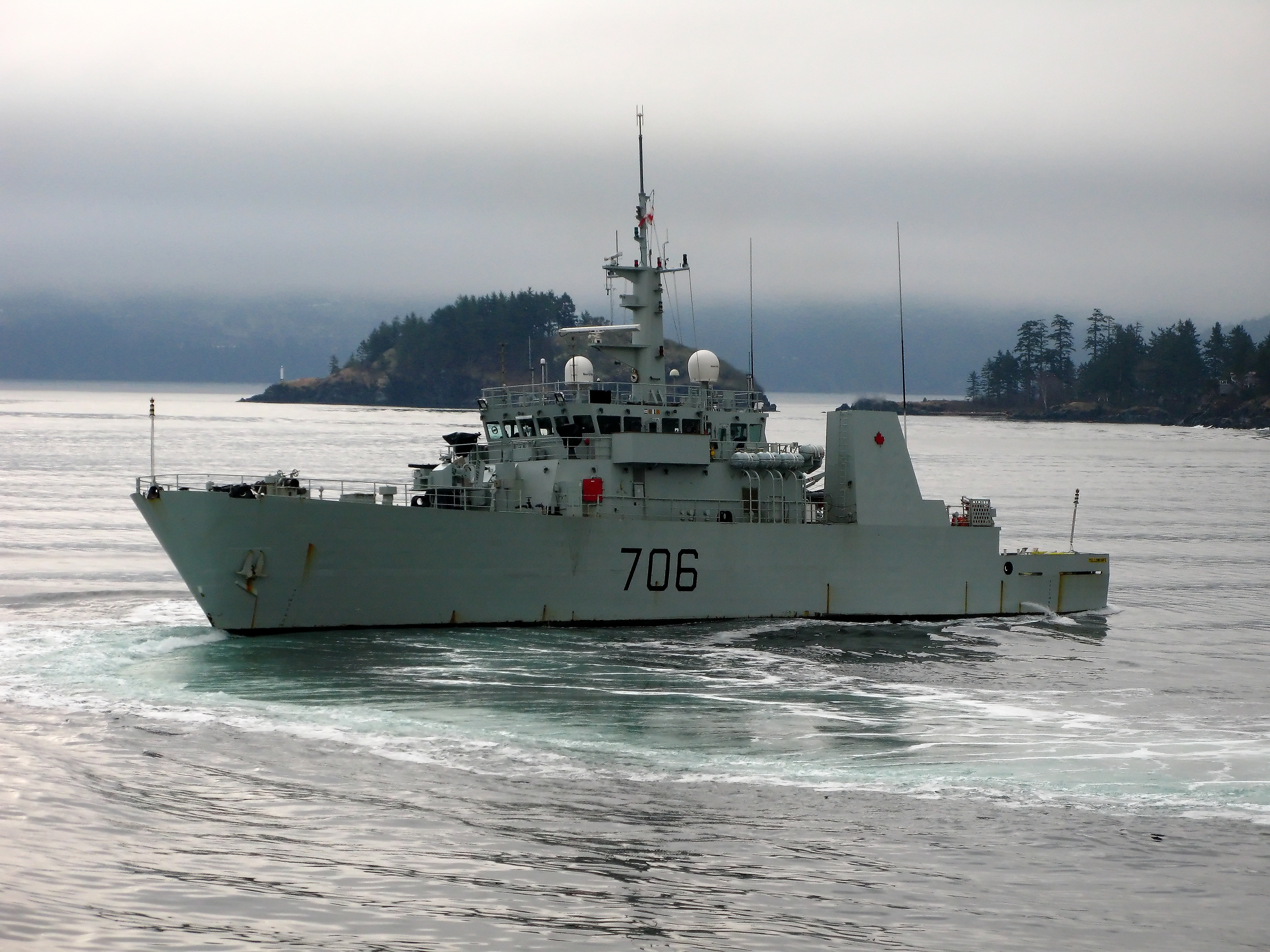
MCS Yellowknife underway, July 5, 2006. (Wikipedia Commons User: Tawker)
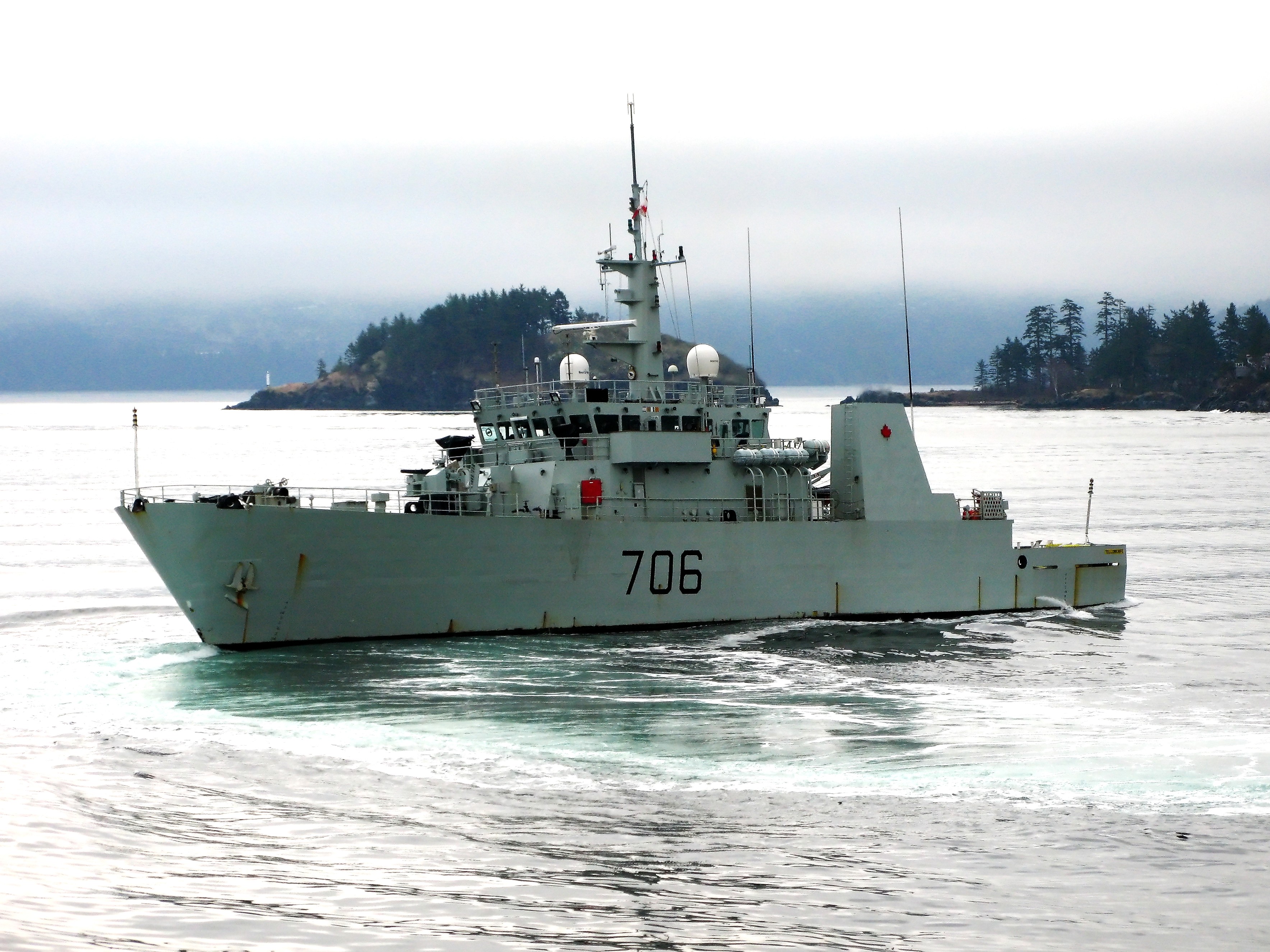
HMCS Yellowknife, February 6, 2009. (Wikimedia Commons User: Urban Mixer)