
HMCS WASKESIU (K330)

HMCS WASKESIU
The History of HMCS WASKESIU
HMCS Waskesiu (K330) was a River-class frigate of the Royal Canadian Navy and the first frigate completed on Canada's west coast.
Ordered in October 1941 as part of the 1942-1943 River-class building programme, she was laid down on 2 May 1942 by Yarrows Ltd. at Esquimalt, British Columbia. Official records list her launch date as 6 December 1942, though some secondary sources give 3 April 1943. She was commissioned at Victoria on 16 June 1943.
River-class frigates were typically named after Canadian towns and cities, and Waskesiu
was intended to be named for Prince Albert, Saskatchewan. However, the ship received the name Waskesiu after the nearby townsite in Prince Albert National Park because a vessel named Prince Albert already existed.
After commissioning, Waskesiu sailed for Halifax on 8 July 1943, worked up in Bermuda, and returned to Halifax on 11 September. In late October she joined Escort Group 5 (later renumbered EG 6) based at Londonderry, Northern Ireland. She primarily operated in British waters while supporting Gibraltar and Sierra Leone convoys in 1944.
Waskesiu's most notable action came on 24 February 1944 while escorting convoy SC.153 in the North Atlantic. Working with the Royal Navy frigate HMS Nene, she detected and attacked the German Type VIIC submarine U-257. After depth-charge attacks forced the U-boat to the surface, gunfire from Waskesiu, including four hits on the conning tower, helped sink her. This was the first U-boat kill credited to a Royal Canadian Navy frigate. Survivors were rescued.
In April 1944 Waskesiu escorted the return convoy RA.59 from North Russia. She was present for D-Day operations in June 1944, conducting anti-submarine patrols covering the western approaches to the English Channel. On 14 September 1944 she left Londonderry with convoy ONF.253 for Canada and began an extensive refit at Shelburne, Nova Scotia, completed in March 1945. After further work-ups she returned briefly to European waters before heading back to Canada.
In June 1945 Waskesiu arrived at Esquimalt for a tropicalization refit intended for possible Pacific service. Work was suspended in August 1945 after Japan's surrender. She was paid off into reserve on 29 January 1946.
In 1947 she was sold to the Indian government for conversion to a pilot vessel and renamed Hooghly in 1950.
HMCS WASKESIU Statistical Data
- Pendant: K330
- Type: Frigate
- Class: RIVER Class 42-43 Programme
- Displacement: 1445 tonnes
- Length: 301.5 ft
- Width: 36.6 ft
- Draught: 9 ft
- Speed: 19 kts
- Compliment: 8 Officers and 133 Crew
- Arms: 1-4" (1 x II), 1-12 pdr.
- Builder: Yarrows Ltd.. Esquimalt, B.C.
- Keel Laid: 2-May-42
- Date Launched: 06-Dec-42
- Date Commissioned: 16-Jun-43
- Paid off: 29-Jan-46
HMCS WASKESIU Photos
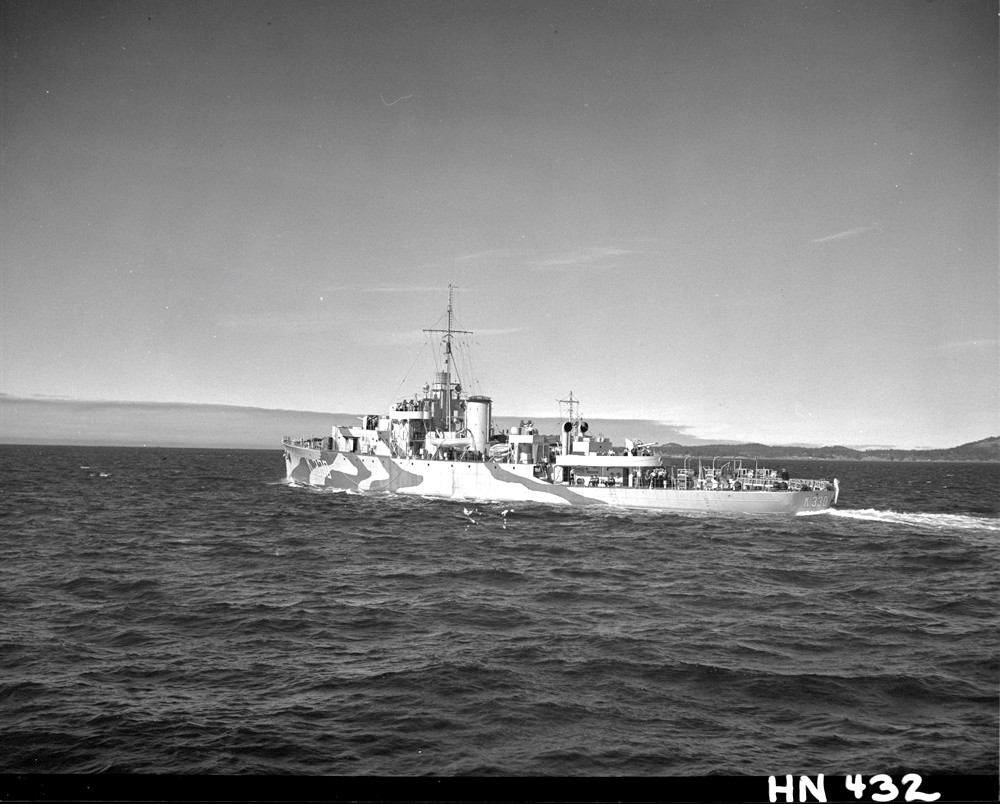
WASKESIU, 45 degrees off port quarter, 1943. (Library and Archives Canada)
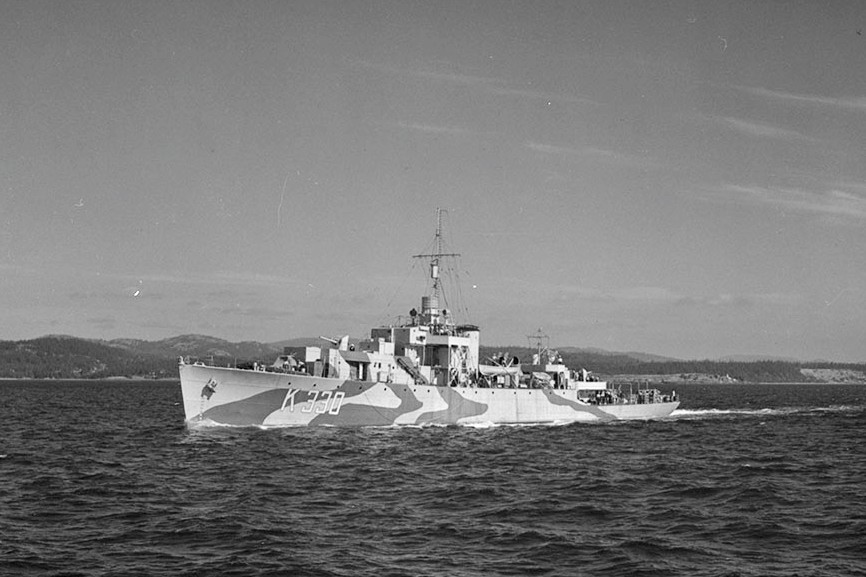
H.M.C.S. WASKESIU frigate, 1943. (Library and Archives Canada)
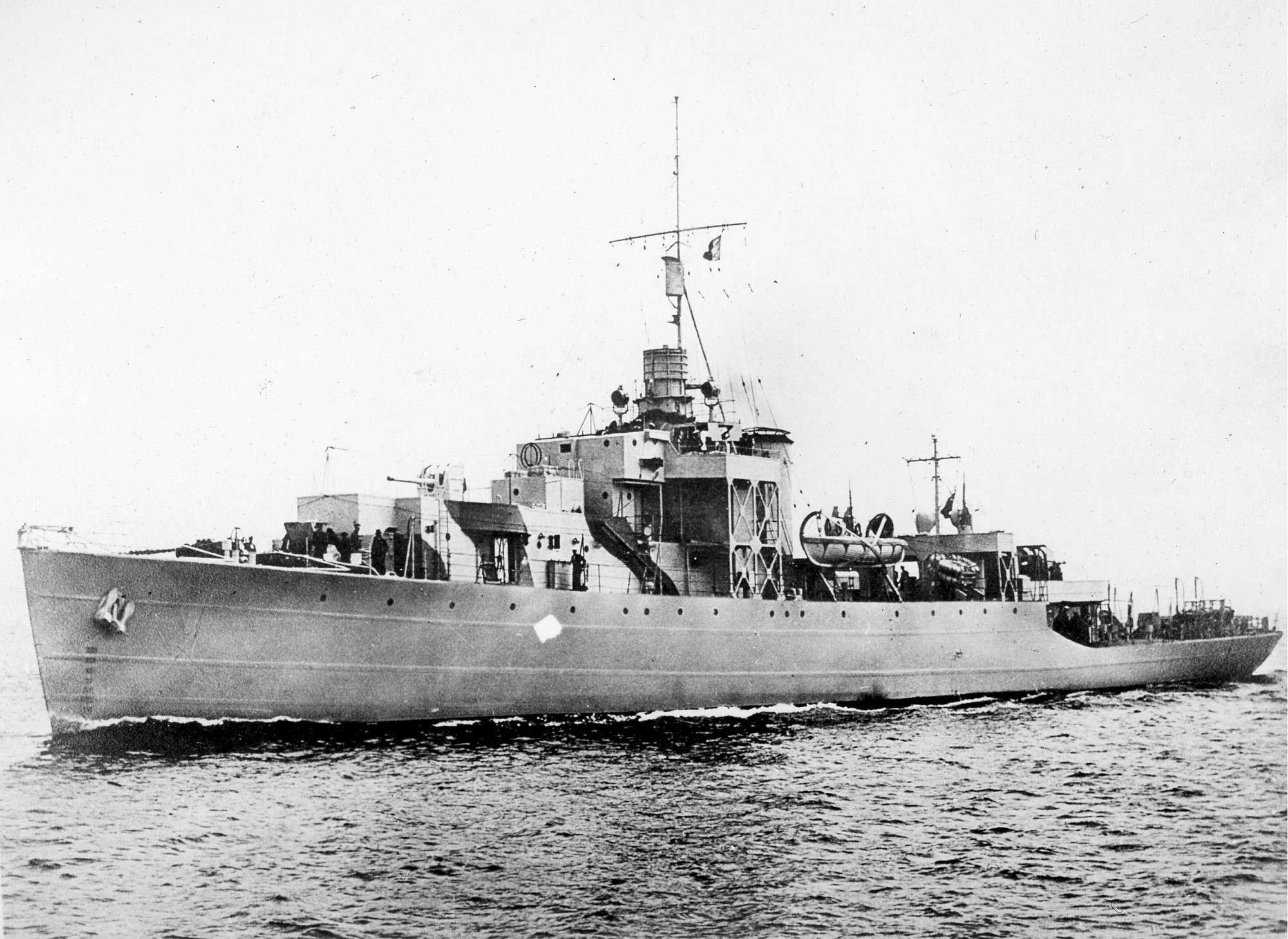
HMCS WASKESIU K330 (RCN photo)
Keywords: HMCS WASKESIU, Royal Canadian Navy Ship, Frigate, RIVER Class 42-43 Programme Class