
HMCS RIBBLE (K525)

HMCS RIBBLE
The History of HMCS RIBBLE
HMCS Ribble (K525) was a River-class frigate that served with the Royal Canadian Navy in the later stages of the Second World War.
The ship was ordered for the Royal Navy on 14 June 1942 as part of the 1941 War Programme. She was laid down on 31 December 1942 at Blyth Shipbuilding and Dry Dock Company in Blyth, United Kingdom, originally under the name HMS Duddon. The name was changed to HMS Ribble in June 1943, after the English river. She was launched on 10 November 1943. In July 1944, before construction was fully complete, the vessel was transferred to the Royal Canadian Navy. She was commissioned as HMCS Ribble on 24 July 1944 at Blyth. Build completion and acceptance trials followed in early August, after which the ship proceeded to Tobermory for working-up exercises.
In early September 1944 Ribble arrived at Londonderry and joined the newly formed 26th Escort Group (EG 26). She remained with this Canadian group for the rest of her active career, operating primarily from bases at Portsmouth and Plymouth while conducting convoy escort and anti-submarine duties in the North Atlantic and approaches to the United Kingdom. In early October 1944, while escorting convoy ONS 33, she was detached to assist the damaged frigate HMCS Chebogue, which had been struck by an acoustic torpedo from U-1227. Ribble helped tow the stricken vessel toward Swansea.
On 18 December 1944, Ribble and the frigate HMCS Montreal rescued 44 survivors from the German submarine U-1209 in the English Channel near the Scilly Isles. The U-boat had struck Wolf Rock and was subsequently scuttled. Although the Canadian ships claimed credit for attacks that contributed to the loss, Admiralty findings determined that the grounding and scuttling were the primary causes.
Through the winter of 1944-45 Ribble continued Atlantic convoy escort work with EG 26. In March 1945 the group shifted to coastal anti-submarine operations around the British Isles to counter the growing threat of snorkel-equipped U-boats. She operated in areas including the Hebrides.
With the end of hostilities in Europe, HMCS Ribble was paid off at Sheerness on 11 June 1945 and returned to Royal Navy control. She was placed in reserve at Harwich, where she remained for more than a decade. In 1957 she was sold for scrap and arrived at Hughes Bolckow in Blyth on 9 July of that year to be broken up.
HMCS RIBBLE Statistical Data
- Pendant: K525
- Type: Frigate
- Class: RIVER Class EX-RN
- Displacement: 1445 tonnes
- Length: 301.5 ft
- Width: 36.6 ft
- Draught: 9 ft
- Speed: 19 kts
- Compliment: 8 Officers and 133 Crew
- Arms: 2-4" (1 x II), 4-20mm, Hedgehog
- Builder: Blyth Shipbuilding & Dry Dock Co. Ltd., Blyth, U.K.
- Keel Laid: 31-Dec-42
- Date Launched: 10-Nov-43
- Date Commissioned: 24-Jul-44
- Paid off: 06-Nov-45
HMCS RIBBLE Photos
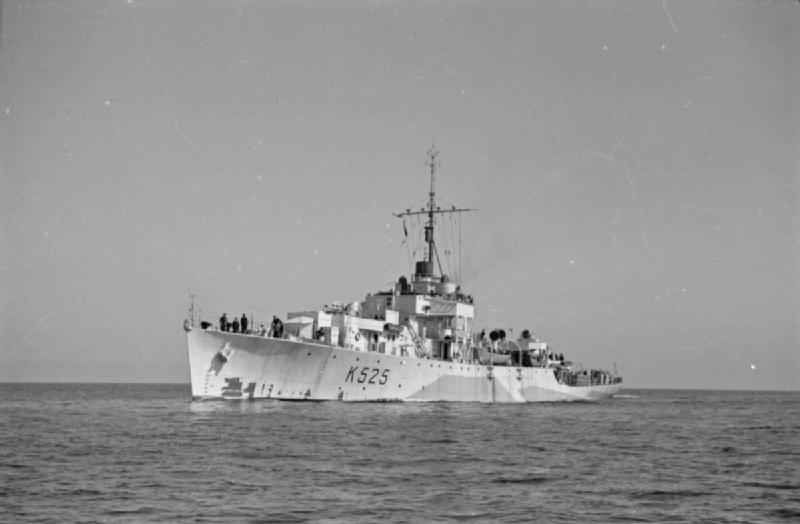
River class frigate HMCS Ribble, September 1944 (Wikimedia/Imperial War Museum)
Keywords: HMCS RIBBLE, Royal Canadian Navy Ship, Frigate, RIVER Class EX-RN Class