
HMCS NEW GLASGOW (K320/315)

HMCS NEW GLASGOW
The History of HMCS NEW GLASGOW

HMCS New Glasgow was a River-class frigate of the Royal Canadian Navy, named for the town of New Glasgow, Nova Scotia. Ordered in April 1942 as part of the wartime building program, she was constructed by Yarrows Ltd. at Esquimalt, British Columbia. Her keel was laid on 4 January 1943, and she was launched on 5 May 1943, then she was commissioned on 23 December 1943 with pendant K320.
After commissioning, New Glasgow sailed from Esquimalt via the Panama Canal and arrived at Halifax on 17 February 1944. She worked up at Bermuda and then joined Mid-Ocean Escort Force group C-1. From May 1944 she escorted trans-Atlantic convoys, including her first as senior ship with HXS.291 departing St. John's on 15 May. In late September 1944 she transferred to Escort Group 26, a Canadian formation based at Londonderry (Lough Foyle), Northern Ireland, and spent the remainder of the European war supporting convoys in UK waters, with temporary assignments to Portsmouth and Plymouth.
New Glasgow's most notable wartime action occurred on 20-21 March 1945, shortly after leaving Lough Foyle the crew sighted the schnorkel and periscope of the German submarine U-1003 only about 100 yards off the port bow. New Glasgow rammed the U-boat, fatally damaging it. The frigate suffered a broken propeller and other hull damage and returned to port for repairs at Rosyth, Scotland, which lasted until 5 June 1945. U-1003 remained submerged for nearly two days before surfacing and being scuttled by her crew on 23 March in the Northern Channel near Inishtrahull Beacon. Thirty-one survivors were rescued by other ships; the incident marked the last U-boat destroyed by a Royal Canadian Navy warship in the Second World War.
New Glasgow returned to Canada and was paid off into reserve at Shelburne, Nova Scotia, on 5 November 1945.
In the postwar period, New Glasgow was taken from reserve and converted to a Prestonian-class ocean escort. Modifications included a flush deck aft, enlarged bridge, taller funnel, ice-strengthened forward hull, and an enclosed quarterdeck housing two Squid anti-submarine mortars.
New Glasgow was recommissioned on 30 January 1954 with pennant 315 and was assigned to Pacific Command, arriving at Esquimalt on 1 April 1954 as one of the first rebuilt frigates on the West Coast. She served primarily in a training role with escort squadrons, participating in exercises and Pacific cruises that included visits to Japan, Midway, Hawaii, Fiji, New Zealand, Australia, and Samoa.
In 1955 she appeared in the Hollywood film "The Sea Chase", starring John Wayne, standing in for a Royal Navy vessel. She was paid off for the final time at Esquimalt on 30 January 1967 and broken up in Japan later that year.
HMCS NEW GLASGOW Statistical Data
- Pendant: K320/315
- Type: Frigate
- Class: RIVER Class 42-43 Programme
- Displacement: 1445 tonnes
- Length: 301.5 ft
- Width: 36.6 ft
- Draught: 9 ft
- Speed: 19 kts
- Compliment: 8 Officers and 133 Crew
- Arms: 1-4" (1 x II), 1-12 pdr.
- Builder: Yarrows Ltd.. Esquimalt, B.C.
- Keel Laid: 4-Jan-43
- Date Launched: 5-May-43
- Date Commissioned: 23-Dec-43
- Paid off: 05-Nov-45
- Date Recommissioned : 30-Jan-54
- Paid Off (Final) : 30-Jan-67
Remarks
Recommissioned as a Prestonian Class on 2-Sep-55. Pendant Number 315. Finally Paid Off 7-Jun-65.
Photos
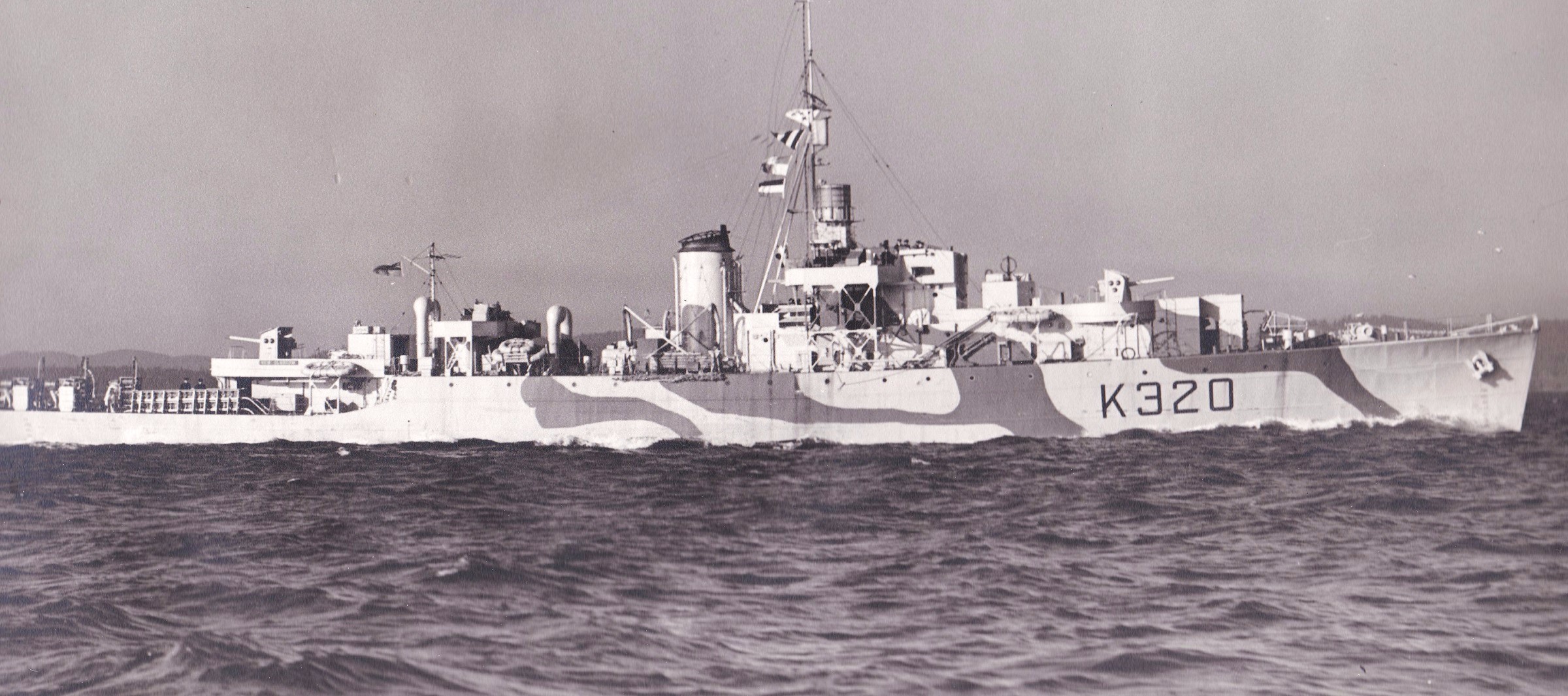
HMCS New Glasgow, K320 (Wartime) (RCN Photo)
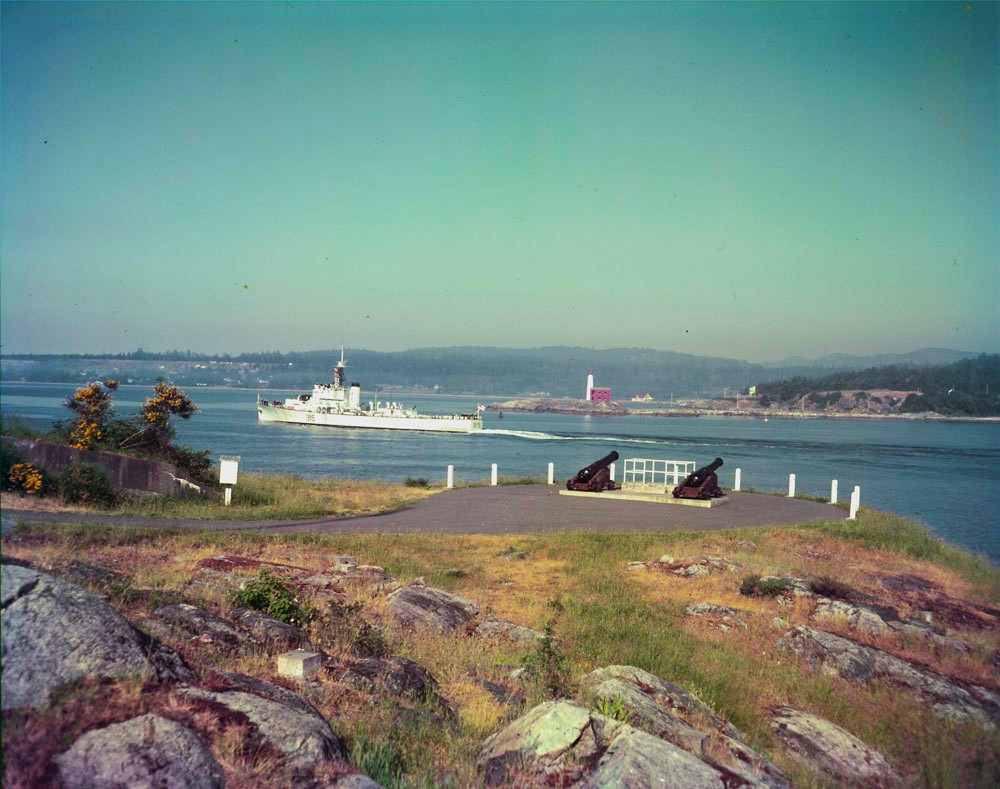
HMCS NEW GLASGOW departing Esquimalt, 1958. (Library and Archives Canada)
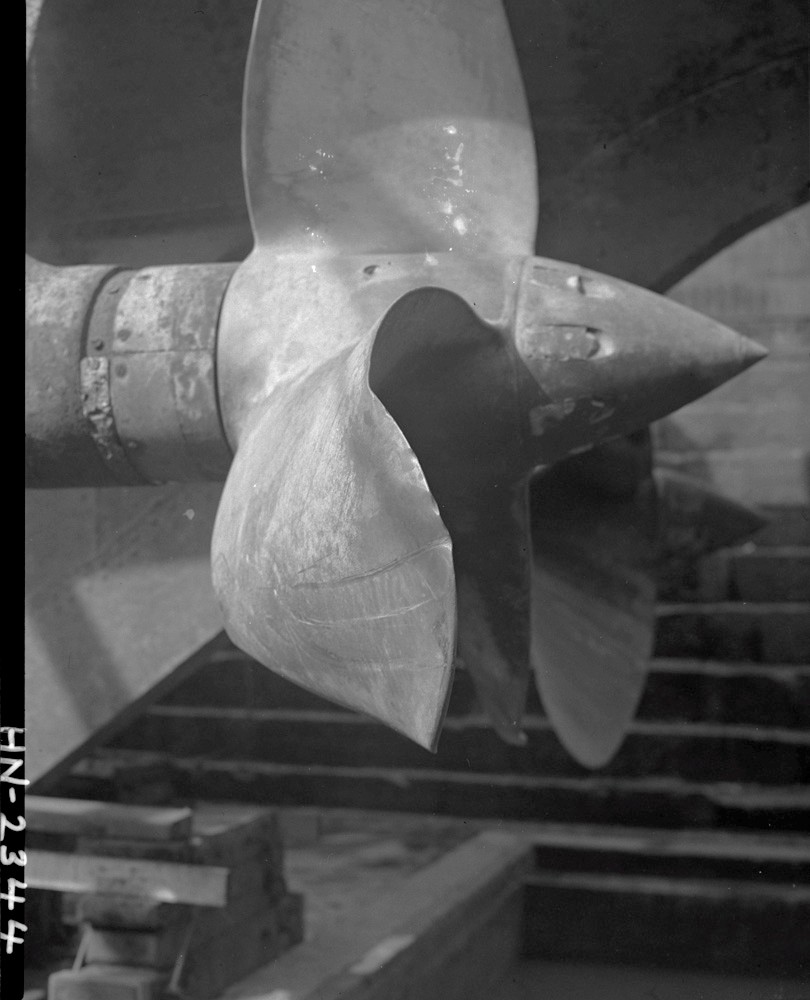
HMCS New Glasgow, propeller damage after ramming U-Boat, 1945. (Library and Archives Canada).
Keywords: HMCS NEW GLASGOW, Royal Canadian Navy Ship, Frigate, RIVER Class 42-43 Programme Class