
HMCS HURON (1st) (G24/216)

HMCS HURON (1st)
The History of HMCS HURON (1st)

HMCS Huron was a Tribal-class destroyer named in honour of the Huron First Nation. She served the Royal Canadian Navy for a lengthy time, with distinction, in the Second World War and the Korean War before being broken up in 1965.
Ordered in April 1940 as part of the initial Canadian order for Tribal-class ships, Huron was built by Vickers-Armstrongs at Newcastle upon Tyne, England. She was laid down on 15 July 1941, launched on 25 June 1942, and commissioned into the Royal Canadian Navy on 19 July 1943 with the pennant number G24. Canadian Tribals incorporated modifications for North Atlantic service, including improved heating and ventilation.
After working up with the British Home Fleet, Huron joined the 3rd Destroyer Flotilla. In late 1943 and early 1944 she escorted Arctic convoys to North Russia, carrying supplies and personnel on the Murmansk run. She was present at the Battle of the North Cape in December 1943 during the sinking of the German battleship Scharnhorst.
In February 1944 she transferred to the 10th Destroyer Flotilla at Plymouth for operations in support of the Normandy invasion. With her sister ships, including HMCS Haida, she conducted offensive patrols in the English Channel and Bay of Biscay. On the night of 25-26 April 1944, in company with other ships of the flotilla, she helped sink the German torpedo boat T29, however she was damaged in a collision with HMS Ashanti during the action and required repairs.
Huron was present on D-Day, 6 June 1944. Later that month, during the Battle of Ushant, she and Haida forced the German destroyer Z32 aground and destroyed the wreck. She continued Channel operations through the summer before returning to Canada for a refit in August 1944.
After further escort duties in European waters into 1945, including a final Arctic convoy, Huron returned to Canada. A planned tropicalization refit for possible Pacific service was cancelled after the Japanese surrender. Huron was paid off on 9 March 1946.
Huron was recommissioned at Halifax in 1950, initially for training, and soon deployed for the Korean War. She completed multiple tours with United Nations naval forces in Korean waters between 1951 and 1954, conducting screening, patrol, and shore bombardment duties. During this period she was converted to a destroyer escort with enhanced anti-submarine equipment.
After the Korean war ended Huron returned to peacetime training and NATO exercises in the Atlantic. She was finally paid off at Halifax on 30 April 1963 and broken up at La Spezia, Italy, in 1965.
HMCS HURON (1st) Statistical Data
- Pendant: G24/216
- Type: Destroyer
- Class: TRIBAL 1940s
- Displacement: 1927 tonnes
- Length: 377 ft
- Width: 37.5 ft
- Draught: 11.2 ft
- Speed: 36 kts
- Compliment: 14 Officers and 245 Crew
- Arms: 6-4.7" (3 x II), 2-4" (1 xII), 4-21" Torpedo Tube (1 x IV), 4-2 pdrs., 6-20mm.
- Builder: Vickers-Armstrongs Ltd., Newcastle-on-Tyne. U.K.
- Keel Laid: 15-Jul-41
- Date Launched: 25-Jun-42
- Date Commissioned: 19-Jul-43
- Paid off: 09-Mar-46
Remarks
Later recommissioned with pendant 216. Paid off 30 Apr 63.
Photos
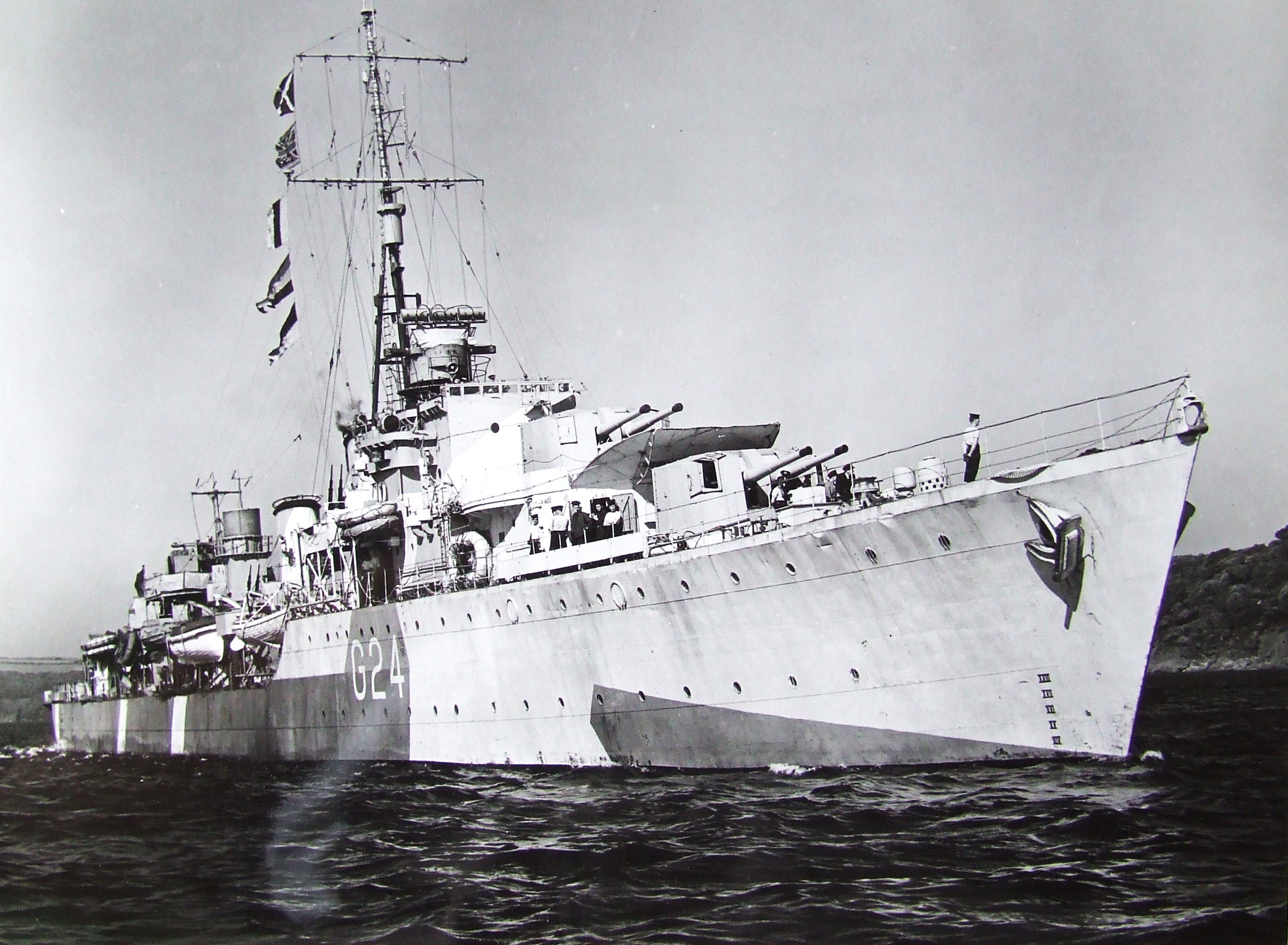
HMCS Huron (G24) (Wikimedia Commons)
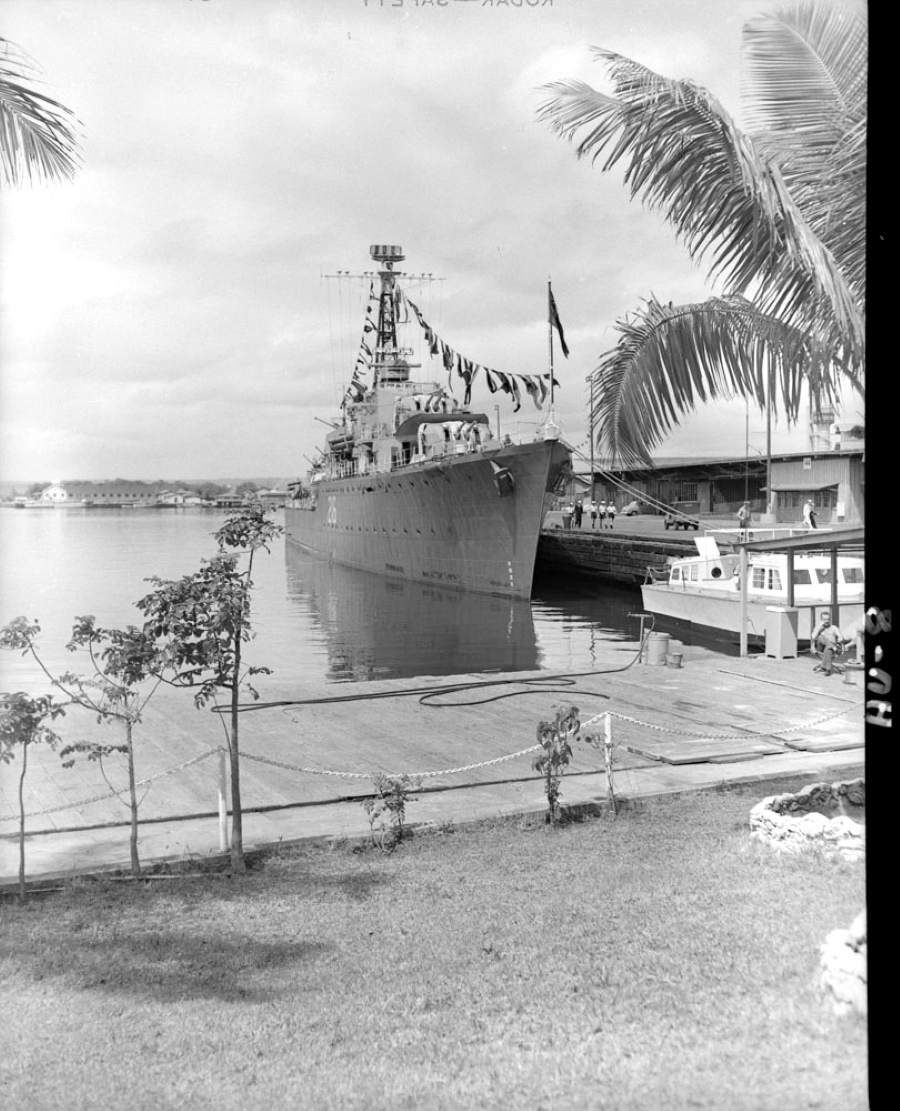
HMCS Huron at Pearl harbor, 1951. (Library and Archives Canada)
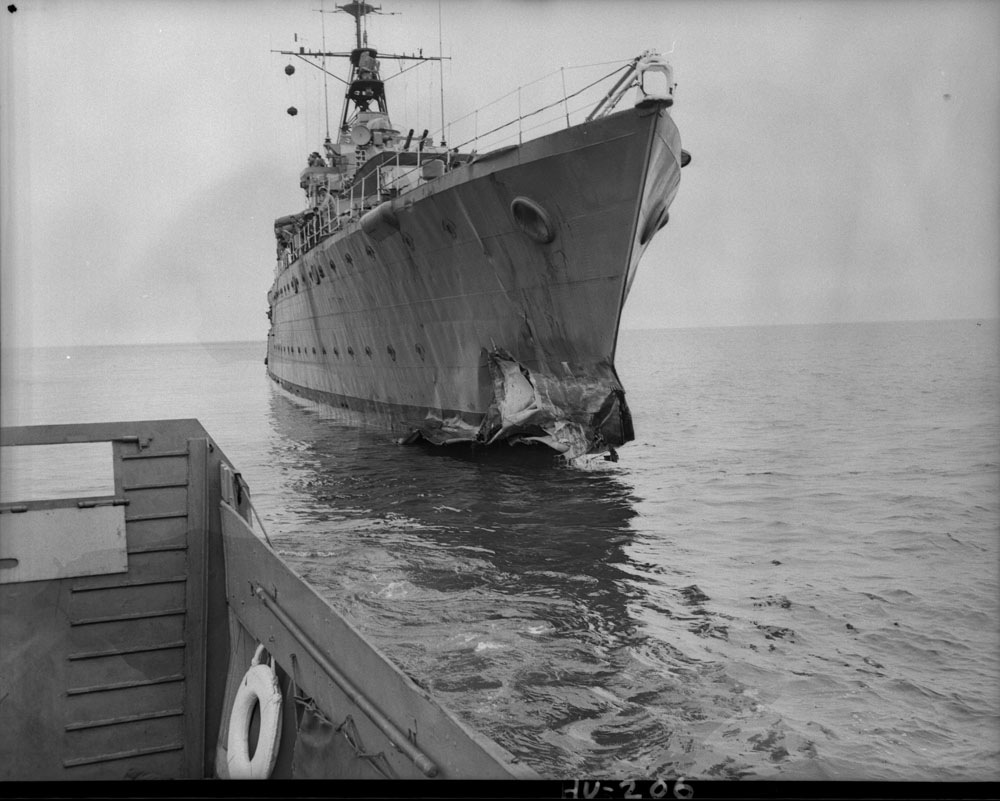
HMCS Huron with hull damage, 1953. (Library and Archives Canada)
Keywords: HMCS HURON (1st), Royal Canadian Navy Ship, Destroyer, TRIBAL 1940s Class