

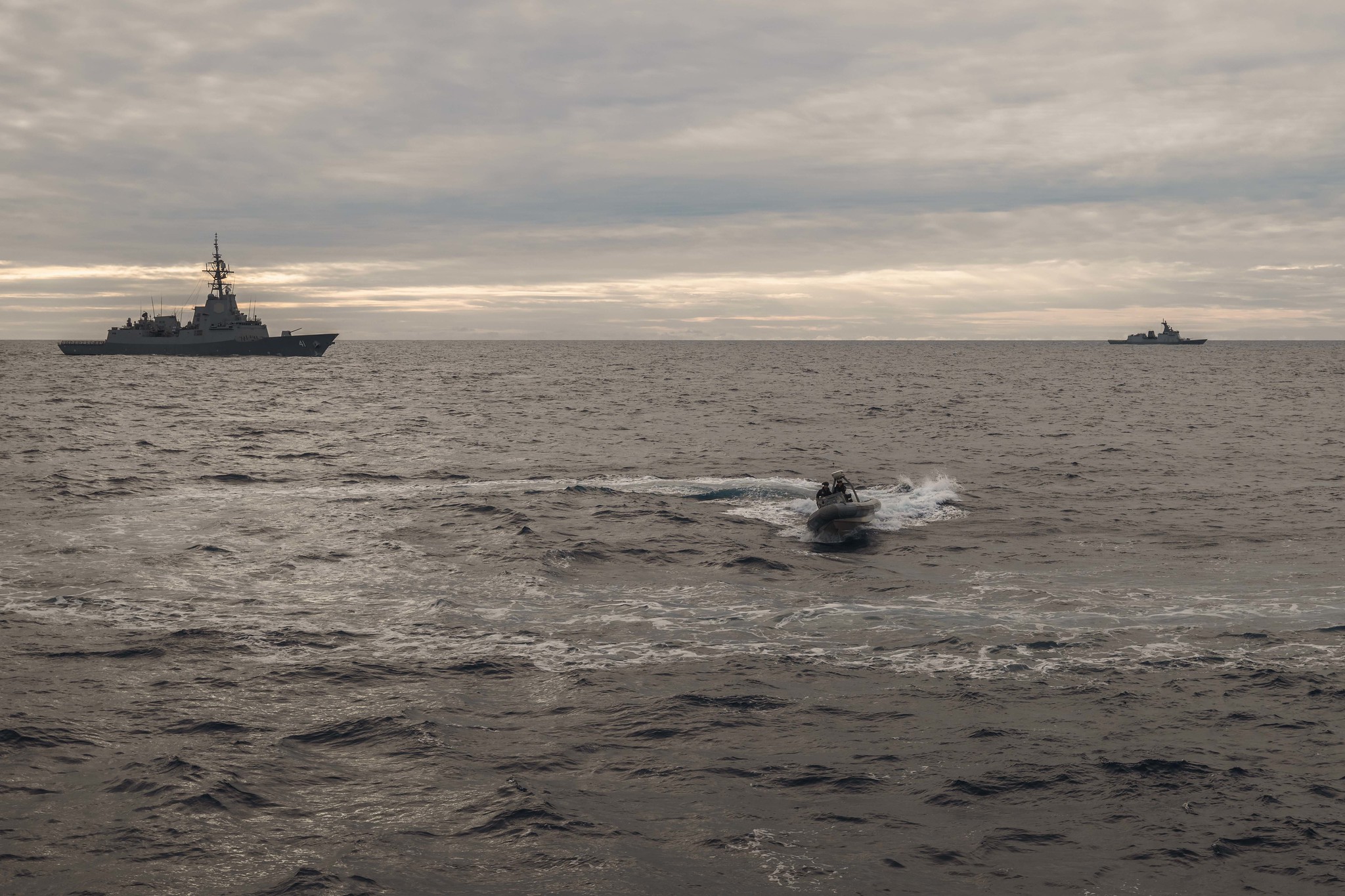
September 7, 2025 – In a move that underscores escalating tensions in the Indo-Pacific, the Canadian frigate HMCS Ville de Québec and the Australian guided-missile destroyer HMAS Brisbane sailed through the Taiwan Strait on September 6, 2025.
The transit, described by Ottawa and Canberra as a routine operation upholding international law, drew immediate and vehement condemnation from Beijing. China’s People’s Liberation Army (PLA) labelled the action “provocative” and a direct challenge to its sovereignty, deploying forces to monitor and warn the vessels throughout their passage. This incident highlights the fragile geopolitical balance in the region, where freedom of navigation clashes with China’s territorial claims over Taiwan and surrounding waters.
The Transit: A Routine Operation or a Deliberate Provocation?
The joint transit occurred just one day after the Chinese military accused Canada and Australia of stoking tensions through naval exercises in the South China Sea. According to reports from CTV News and Taiwan News, the warships entered the 180-kilometre-wide strait early on Saturday morning, tracked via their automatic identification system (AIS) transponders. HMCS Ville de Québec, a Halifax-class frigate deployed under Canada’s Operation Horizon to promote stability in the Indo-Pacific, had been operating near the Philippines earlier in the week, participating in multilateral freedom of navigation exercises with allies including the United States and the Philippines.
Australia’s HMAS Brisbane, a Hobart-class destroyer on a four-month regional presence deployment, joined the Canadian vessel for the passage. Both nations emphasized that the strait is an international waterway under the United Nations Convention on the Law of the Sea (UNCLOS), allowing free navigation. A spokesperson for Australia’s Department of Defence stated, “HMAS Brisbane conducted a routine transit through the Taiwan Strait… in accordance with international law,” reaffirming commitments to a “free and open Indo-Pacific.”
Taiwan’s Ministry of National Defence confirmed it was monitoring the situation closely, deploying its own air and naval assets to maintain security in the strait, which it also regards as international waters. The ministry reported detecting 21 Chinese aircraft (including drones) and six warships in the area during the transit, but described the overall situation as stable.
This was not the first such operation for either navy. Canada has conducted multiple transits since launching its Indo-Pacific Strategy in 2022, with HMCS Ottawa sailing through the strait in February 2025. Australia frequently joins U.S.-led freedom of navigation operations (FONOPs) in the region. However, joint transits like this one are rarer and often provoke stronger responses from Beijing, especially amid heightened military activities around Taiwan.
Beijing’s Response: “Trouble-Making” and Heightened Risks
China’s reaction was swift and unambiguous. The PLA Eastern Theater Command, responsible for operations around Taiwan, issued a statement through spokesperson Senior Colonel Shi Yi, accusing the warships of “causing trouble and provoking.” The command revealed that it had organized naval and air forces to “track and monitor” the vessels throughout the transit, issuing warnings and ensuring the situation remained “under control.”
“The actions of Canada and Australia have sent out wrong signals and heightened security risks,” Shi stated, emphasizing that PLA troops “remain on high alert at all times and are ready to resolutely safeguard China’s national sovereignty, security, and regional peace and stability.” Official Chinese media, including the state-run Global Times and China Military Online, echoed this narrative, framing the transit as a deliberate escalation by “U.S. allies” aimed at undermining Beijing’s authority.
This rhetoric aligns with China’s long-standing position that the Taiwan Strait is part of its territorial waters, given its claim over Taiwan as an inalienable province. Beijing views such transits—conducted by the U.S. Navy and allies about once a month—as violations of its sovereignty and provocations that embolden “Taiwan independence” forces. The timing, following joint exercises in the South China Sea where China had already lodged protests, amplified the perception of coordinated Western pressure.
In a broader context, China’s military has intensified activities in the strait over the past five years, including large-scale war games and frequent incursions into Taiwan’s air defence identification zone (ADIZ). Recent reports from August 2025 noted unusual PLA deployments, such as civil-military ferries and landing craft massing in the area, possibly in preparation for amphibious exercises. The warship transit occurred against this backdrop, potentially heightening Beijing’s sensitivity.
