

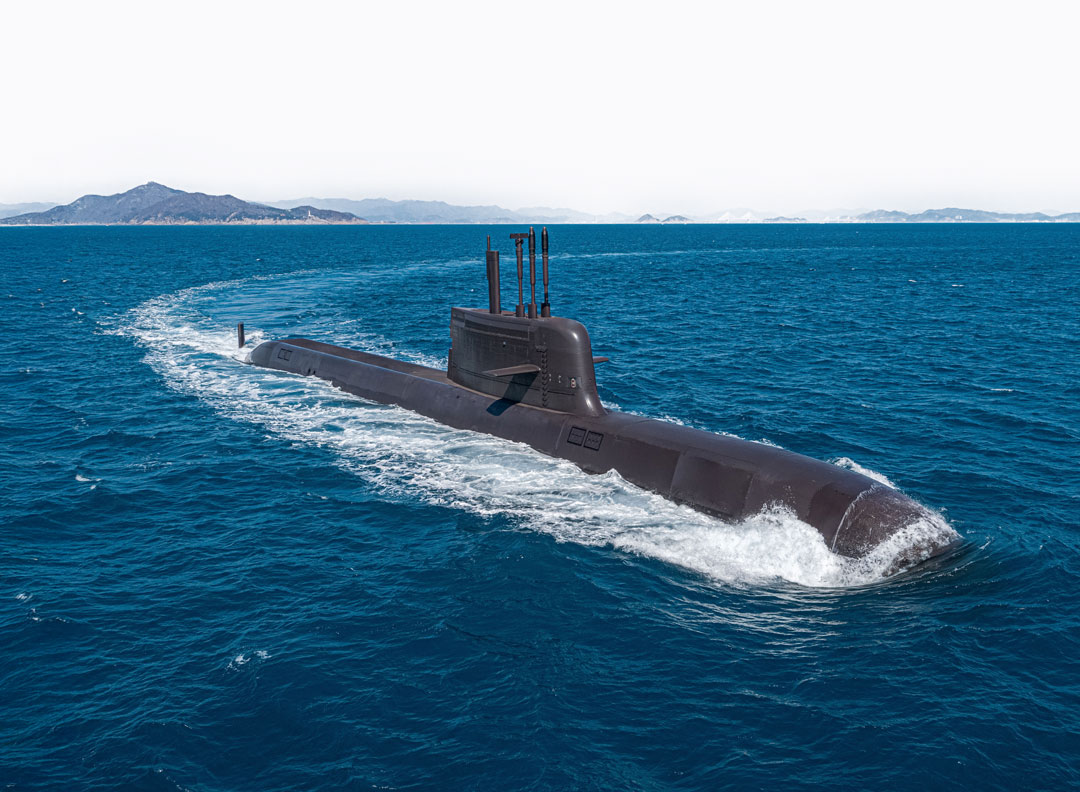
As of mid-April 2026, Canada has not yet selected a supplier for its new submarine fleet.
The Canadian Patrol Submarine Project (CPSP) remains in the competitive bidding phase, with a short extension granted to both finalists to improve their proposals—particularly on economic and industrial benefits to Canada.
The government (via the Defence Investment Agency) received initial proposals from the two qualified suppliers by the original March 2, 2026 deadline. It then opened a limited “Proposal Amendment Phase” (about 20 extra days), giving bidders until April 29, 2026 to revise or enhance their offers. This is not a reopening of the competition but an opportunity to better align with Canada’s Defence Industrial Strategy (released February 2026), which emphasizes Canadian jobs, domestic industry participation, and value for money.
A decision on the preferred supplier is still expected by the end of June 2026 (per Prime Minister Mark Carney) or later in 2026, followed by contract negotiations. The goal is to award a contract by the end of 2026.
Canada plans to acquire up to 12 conventionally powered (diesel-electric) submarines to replace its four aging Victoria-class submarines (acquired from the UK in the 1990s and slated for retirement in the mid-to-late 2030s). The first new submarine must arrive no later than 2035 to avoid a capability gap. The project supports Arctic sovereignty, NATO commitments, and Pacific operations.
Costs are estimated to be approximately $20 billion for acquisition; lifecycle costs (including sustainment) could reach $60–120 billion.
There is a strong focus on Canadian industrial benefits (e.g., jobs, shipbuilding partnerships, and technology transfer). Both bidders have signed numerous teaming agreements and MOUs with Canadian firms.
The Royal Canadian Navy is simultaneously modernizing the current Victoria-class fleet (e.g., new digital periscopes awarded to Safran in February 2026) to keep it operational until the new boats arrive.
The Two Competing Designs are from Hanwha Ocean (South Korea), who are offering the KSS-III Batch-II, a larger, advanced diesel-electric submarine already in service with the Republic of Korea Navy, and ThyssenKrupp Marine Systems (TKMS, Germany) who offering the Type 212CD, a next-generation air-independent propulsion submarine, developed with Norway; larger and stealthier than earlier Type 212 models.



The Korean offering makes much more sense for Canada in the long term, better long-range strike capabilities, faster delivery schedule four boats delivered by 2035 saving billions of dollars in sustainment cost of the Victoria Class. The first 212CD will not be delivered until 2029 to the Norwegian Navy while Germanys first boat is scheduled around 2032. Where would a Canadian order fit into the production schedule?
While under ice capability is good and needed for Canada submarine forces, they should concentrate on the approaches to the Arctic preventing U.S. British, Russian, French and Chinese submarines from ever entering the Arctic.
Korea could sweeten the Submarine offering by including 2 Dokdo Class Amphibious Assault ships. Canada has wanted Amphibious capability for some time. The Dokdo class fits Canadas requirements, small crew (300), hospital facilities for humanitarian and disaster relief and peace keeping roles and the ability to carry 720 marines and ten tanks, ten trucks, 7 AAVs, three field artillery pieces, and two LCAC hovercraft. It can also carry ten helicopters when no ground vehicles are on its hangar deck, they could be built in Canada.
One ship on each coast to serve as Command-and-Control Fleet Flagships. Names? HMCS Canada and HMCS Bonaventure these could be built in Canada.