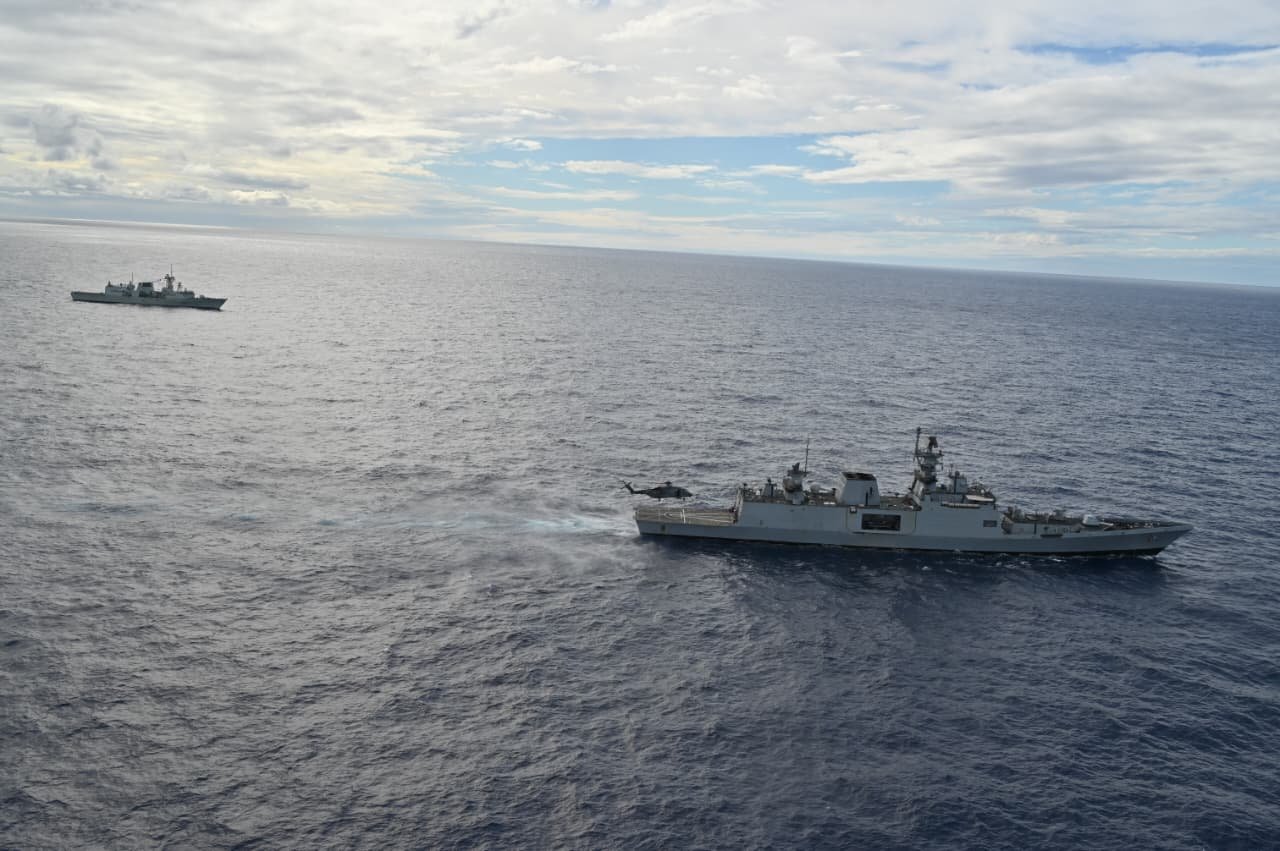
On November 15, 2026, the Indian Navy’s indigenously built stealth frigate INS Sahyadri (F49) conducted a bilateral naval engagement with the Royal Canadian Navy’s HMCS Regina (FFH 334). The exercise featured a series of coordinated maritime activities designed to strengthen operational cooperation and interoperability between the two navies.
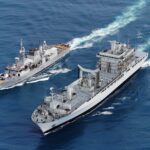
The engagement included cross-deck landings (helicopters from one ship landing on the other’s flight deck), vertical replenishment (VERTREP, in which supplies are transferred between ships by helicopter while underway), and a Passage Exercise (PASSEX). The PASSEX involved coordinated ship handling, seamless communication, and joint flight operations as the vessels sailed together.
The Indian Navy announced the interaction on X on November 18, describing it as “Strengthening Bonds at Sea!” and highlighting efforts to foster closer maritime ties between India and Canada. Official statements emphasized the spirit of friendship and the practical value of demonstrating the ability to operate together across different maritime activities.
INS Sahyadri is a Shivalik-class (Project 17) guided-missile frigate, the third and final ship of India’s first class of indigenously designed stealth frigates. Built by Mazagon Dock Limited in Mumbai, she was commissioned on July 21, 2012. Displacing approximately 6,200 tonnes fully loaded, she measures about 142.5–144 meters in length and is powered by a CODOG (Combined Diesel or Gas) system that enables speeds of up to 32 knots. Her armament includes BrahMos supersonic cruise missiles, Shtil-1 and Barak-1 surface-to-air missiles, a 76 mm OTO Melara gun, close-in weapon systems, torpedoes, and anti-submarine rockets. She can embark two helicopters (typically HAL Dhruv or Sea King variants) and features reduced radar, infrared, and acoustic signatures. Assigned to the Eastern Naval Command, Sahyadri has participated in numerous international deployments and exercises.
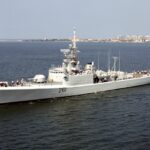
HMCS Regina is a Halifax-class multi-role frigate of the Royal Canadian Navy, commissioned on September 30, 1994, and homeported at CFB Esquimalt on Canada’s Pacific coast. She is the fifth ship of the Canadian Patrol Frigate Project and the second vessel to bear the name. With a displacement of roughly 4,800–5,000 tonnes, a length of about 134 meters, and a top speed of around 30 knots, she is optimized for anti-submarine warfare while retaining general-purpose surface and air defense capabilities. Modernized under the Halifax Class Modernization/Frigate Equipment Life Extension (HCM/FELEX) program, she operates a CH-148 Cyclone helicopter and carries Harpoon missiles, Evolved Sea Sparrow missiles, a 57 mm gun, and advanced sensors including SMART-S radar and towed-array sonar. Regina has a long record of Indo-Pacific deployments, including operations under frameworks such as Operation Horizon.
The November 15 engagement followed the inaugural India–Canada Defence Dialogue, held virtually on November 3, 2026. Co-chaired by Dr. Amit Telang, Joint Secretary (International Cooperation) in India’s Ministry of Defence, and Scott Millar, Assistant Deputy Minister (Policy) in Canada’s Department of National Defence, the dialogue explored defence industrial cooperation, military-technical exchanges, and defence research and development. It built on the March 2, 2026 joint statement by Indian Prime Minister Narendra Modi and Canadian Prime Minister Mark Carney, which committed both countries to expanding defence and strategic engagement after a period of strained relations.
While limited in scope and duration, the engagement between INS Sahyadri and HMCS Regina represents a visible operational step in the gradual rebuilding of India–Canada defence ties. For the Indian Navy, it continues a pattern of regular interactions with partner navies across the Indo-Pacific. For the Royal Canadian Navy, it aligns with ongoing regional presence and interoperability efforts. Both services described the activity as contributing to stronger professional relations and mutual understanding at sea.