

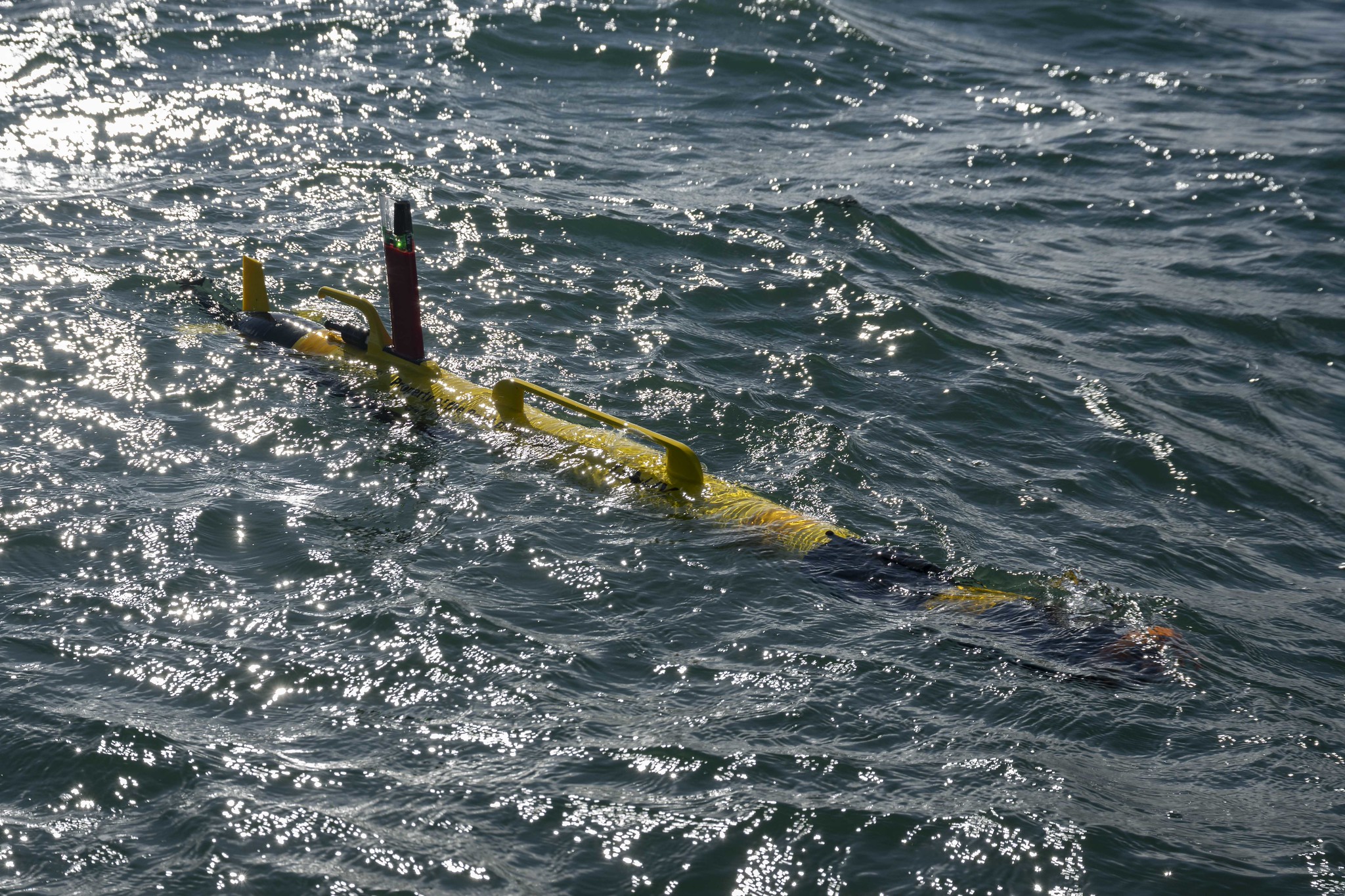
Canada’s coastline is the longest on Earth. Its maritime approaches stretch from ice-choked Arctic channels to busy Atlantic and Pacific littorals, and the Navy cannot put a crewed ship on every square kilometre of that water. That simple geography is now driving one of the most consequential shifts in Royal Canadian Navy planning: the move from occasional presence toward persistent awareness, using uncrewed and increasingly autonomous systems above, on, and below the surface.
The goal is not novelty. It is sovereignty. Knowing what is moving through Canadian waters—submarines, surface traffic, mines, or infrastructure threats—is the difference between asserting control and hoping nothing is there.
A surveillance problem measured in oceans
Commander Greg Atkinson, section head for remote and autonomous systems in the RCN, has described the problem in blunt terms: the Canadian coastline and littoral waters are “absolutely massive.” Uncrewed underwater vehicles (UUVs) are attractive because they can stay on station longer than a diver or a small boat, revisit the same seabed repeatedly, and take on work that is dull, dirty, or dangerous. But the Navy is not treating them as a plug-and-play replacement for ships or submarines. Officers are asking a harder question first: does the system actually make the force more effective and more resilient when an adversary introduces something new?
That test matters because autonomy at sea is still uneven. Many of today’s vehicles still require close human attention. Commander Phillip Durand, an RCN specialist in maritime counter-drone operations, has noted that the service is often still at a one-to-one ratio of operator to uncrewed system. The operational prize is the opposite: enough onboard decision-making that one sailor can supervise several vehicles as they navigate, collect data, and complete a mission with far less hand-holding.
Taking sailors out of the minefield
The most mature naval use case is mine countermeasures. Fleet diving units already operate REMUS-class vehicles for tasks such as locating practice mines and supporting historical ordnance disposal, including during deployments such as Operation REASSURANCE. Those systems give sailors a way to search the seabed without putting a diver into a suspected minefield first.
The RCN’s longer-term intent is a full stand-off sequence: detect, classify, identify, and dispose of mines and underwater improvised explosive devices from outside the danger area. “Taking the person out of the minefield is what we’re looking to do on the autonomous side,” Atkinson has said. That logic sits behind the Remote Minehunting and Disposal System project, which was designed as a modular, containerized payload of autonomous underwater vehicles and explosive mine-disposal vehicles that can be embarked on Kingston-class ships or other platforms. Contracts awarded to Newfoundland-based Kraken Robotic Systems were intended to give each coast a portable capability rather than tying mine warfare to a single specialized hull.
The industrial piece is part of the sovereignty story. Canada already has firms—Kraken among them—building synthetic-aperture sonars, batteries, and survey payloads that can ride on allied and Canadian vehicles. Autonomy is not only a tactic; it is a way to keep sensing and disposal skills inside Canadian industry instead of importing a complete foreign system every time the threat changes.
The Arctic is the hardest test
If mine hunting is the proof of concept, the Arctic is the stress test. Distances are extreme. Communications drop. Ice covers the very waters Canada most needs to watch. Power, recharge, under-ice navigation, and the ability to get a useful message back to a user are still unsolved as a complete package. Atkinson has listed the practical questions that still sit on the table: how the vehicle talks to its operator, how it charges, and how it works under ice.
Defence Research and Development Canada has been working those problems for years. Field work under the Canadian Arctic Underwater Sentinel Experiment (CAUSE) and related Northern Watch efforts has tested seabed sensors, under-ice acoustics, and autonomous vehicles from sites such as Gascoyne Inlet on Devon Island. The research is not an academic extra. Canada has no Cold War-style fixed underwater listening network covering its Arctic approaches. Until persistent sensors exist, sovereignty in those waters is episodic: a ship or aircraft is present, then it is not.
Academic and DRDC partnerships, including work with researchers such as Dalhousie’s Dr. Mae Seto, are aimed at vehicles that can keep working when they cannot phone home — collecting data, making local decisions, and only later handing a useful picture to a human. In the Arctic, that kind of autonomy is not a luxury. There will not be a continuous human presence on the ice or the seabed. Uncrewed systems are one of the few ways to close the gap between declared sovereignty and actual knowledge of who is passing through.
Not only underwater
The Navy’s autonomy push is three-dimensional. On the surface, the RCN has already moved from target drones to live-fire experimentation. During Exercise Trident Fury 2025, sailors conducted the service’s first live-fire trial with an armed uncrewed surface vessel, adapting a Hammerhead target into a remotely operated one-way system launched from HMCS Vancouver. The experiment was as much about process as hardware: explosives, logistics, diving, surface warfare, and autonomy specialists compressed years of usual approvals into weeks. The lesson the Navy drew was not that Canada should improvise munitions forever, but that it now knows how to write requirements, update policy, and talk to industry about one-way and optionally crewed surface systems.
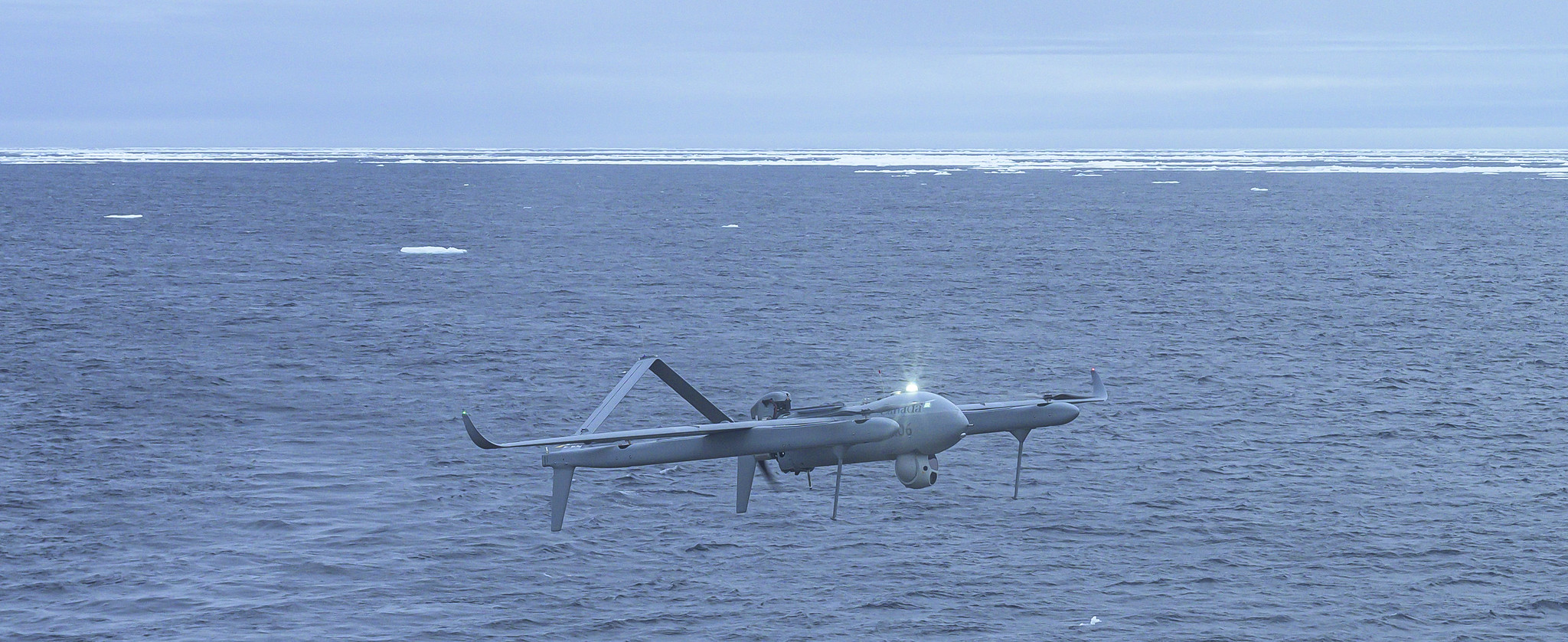
In the air, Halifax-class ships are being fitted with Class-2 uncrewed aircraft under the ISTAR-UAS project, with MDA Space contracted to deliver systems for long-range surveillance and targeting. Initial operational capability is planned for 2028. Those aircraft will not replace maritime patrol planes. They will give a frigate its own organic eyes farther from the mast than a helicopter can stay.
The same officers working underwater autonomy are also preparing for a battlespace “saturated with uncrewed systems, from air, surface and subsurface,” in Durand’s words. That is why the Navy is treating drones as a standard threat class in training, building layered counter-UAS defences, and using the Advanced Naval Capabilities unit to put commercial and military systems into sailors’ hands quickly rather than waiting for a perfect program of record.
Ottawa has tried to accelerate the industrial side as well. The Defence Drone Initiative, launched in July 2026, is meant to connect CAF and Coast Guard requirements to Canadian suppliers across air, ground, surface, and underwater systems, instead of leaving promising prototypes without a path into service. Uncrewed maritime systems are an explicit priority area. Sovereignty here has a second meaning: the ability to buy, adapt, and produce systems in Canada on a timeline that matches the threat, not a decade-long project cycle.
The next layer: persistent underwater watch
Two larger projects in the Our North, Strong and Free policy framework point to where the RCN wants to go. The Uncrewed Underwater Surveillance System is intended to provide covert detection, tracking, and notification of subsurface vessels using long-endurance uncrewed vehicles and sensors in the North, along both coasts, and on expeditionary operations. The Canadian Arctic Suite of Sensors is meant to deliver a mix of self-propelled and stationary autonomous sensors so Canada can understand Arctic bathymetry, ice, oceanography, and acoustics well enough to detect intruders rather than guess. Both are multi-year programs, with initial deliveries not expected until the mid-2030s on current blueprint timelines. That lag is the strategic tension: the undersea picture is needed now, while crewed under-ice submarines and full sensor networks are still years away.
Analysts have argued that Canada should treat those programs as operational emergencies rather than ordinary equipment projects, and lean on firms already working in underwater robotics and acoustics. The RCN’s own public line is more measured. It is using DRDC’s mature experimental work in exercises today so that requirements are written from real operations, not brochures. Atkinson has described the current phase as leveraging research “by providing a mature capability that can be easily integrated into operational exercises that also informs requirements.”
What counts as success?
The Navy keeps returning to a human standard. Technology is not the metric. The metric is whether a sailor can still do the job as conditions get worse, finish the mission, and come home. Durand has framed the test that way, and it is a useful one. Autonomy that merely adds screens and extra operators is a burden. Autonomy that lets a diving team stay out of a minefield, lets a single sailor supervise several vehicles, or keeps a sensor listening under ice when no ship can stay, is a sovereignty tool.
Canada will still need crewed warships, Arctic and offshore patrol vessels, and a future submarine force. Uncrewed systems will not replace them. They can surround them with a wider, cheaper, more persistent web of sensors and effectors—exactly the kind of architecture a country with a small navy and a huge ocean requires.
The work below the surface is therefore not a side experiment. It is how the Royal Canadian Navy is trying to make Canadian waters knowable, and therefore defensible, at a scale no fleet of hulls alone can cover.
