

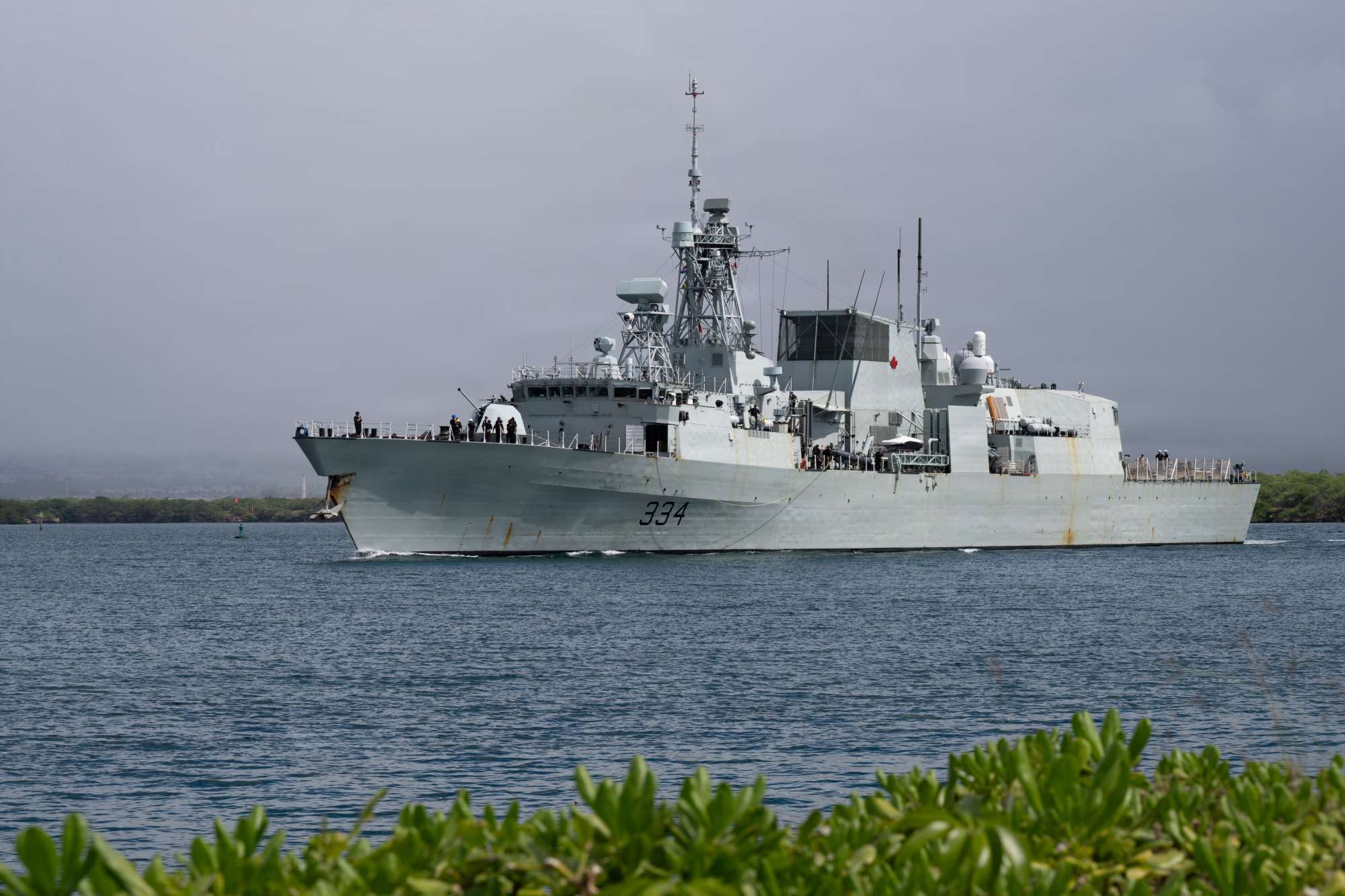
US NAVAL BASE GUAM – Maritime forces from the Royal Australian Navy (RAN), Royal Canadian Navy (RCN), Japan Maritime Self-Defense Force (JMSDF), Royal New Zealand Air Force (RNZAF), Republic of Korea Navy (ROKN), and U.S. Navy (USN) are conducting cooperative maritime exercise Pacific Vanguard 2026, beginning with an opening ceremony, Aug. 30.
Participating ships and units include Royal Canadian Navy Halifax-class patrol frigate HMCS Regina (FFH 334); JMSDF Akizuki-class destroyer JS Fuyuzuki (DD 118), one submarine and one Kawaski P-1 maritime patrol and anti-submarine warfare aircraft; ROK Navy maritime staff support; RAN Hobart-class air warfare destroyer HMAS Sydney (DDG 42); one RNZAF P-8 Poseidon maritime patrol and reconnaissance aircraft; Lewis and Clark-class dry cargo ship USNS Charles Drew (T-AKE 10), and one P-8 Poseidon maritime patrol and reconnaissance aircraft.
“Pacific Vanguard 2026 is a clear demonstration of what we can achieve when like-minded partners come together with a shared commitment to security and stability in the Indo-Pacific,” said Rear-Admiral David Patchell, Commander Maritime Forces Pacific. “The complexity of today’s security environment demands that we train together, challenge ourselves, and learn from one another. Exercises like Pacific Vanguard strengthen our interoperability at sea and build the trust and understanding that are critical to operating effectively as a combined force.”
“Pacific Vanguard is a key opportunity for our combined forces to train and develop shared interoperability,” said U.S. Navy Capt. Neil Gabriel, commodore of Destroyer Squadron 15. “Maintaining security across all domains in the region will always be the war fighters’ priority. By exercising alongside our allies and partners during Pacific Vanguard, we sharpen our combat-credible forces and enhance the interoperability that serves as our asymmetric advantage in the region.”
Pacific Vanguard, now in its eighth iteration, brings together nations contributing to the security, prosperity, freedom, and stability of the region. Focused on enhancing combined interoperability, Pacific Vanguard 2026 will hone core maritime skills in a series of exercises training high-end warfighting capabilities across multiple domains.
“Multilateral ties continue to strengthen across all services and domains,” said JMSDF Rear Adm. Aoki Kunio, commander, Surface Group 3. “By collaborating with our allies and partners, JMSDF will continue to enhance our tactical capabilities and shared interoperability through high-end trainings such as Pacific Vanguard 26. Through this continued commitment to multilateral cooperation, we are upholding the maritime order, security, and stability that are the foundations of a free and open Indo-Pacific.”
Additionally, the exercise provides personnel from the six nations’ forces opportunities to build shared multi-domain awareness and develop relationships that will help streamline combined operations in response to any crisis.
The U.S. military and its allies and partners routinely operate in designated land, air, and sea areas of the Mariana Islands to safely train service members in equipment use, tactics, joint operations, and humanitarian assistance and disaster response missions. Exercises such as Pacific Vanguard have developed a robust network of ready, capable forces to preserve the security, prosperity, and stability of the region.
