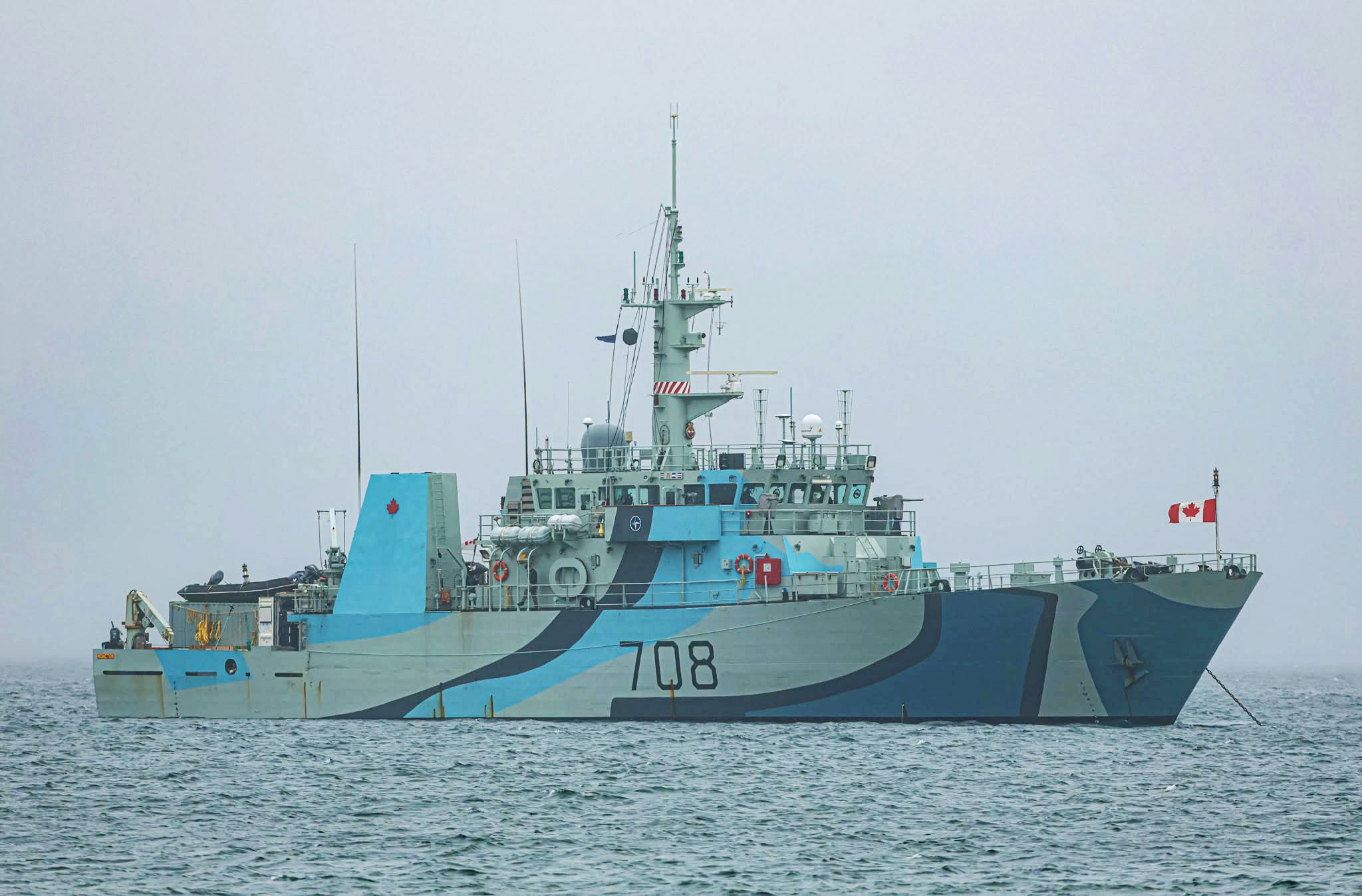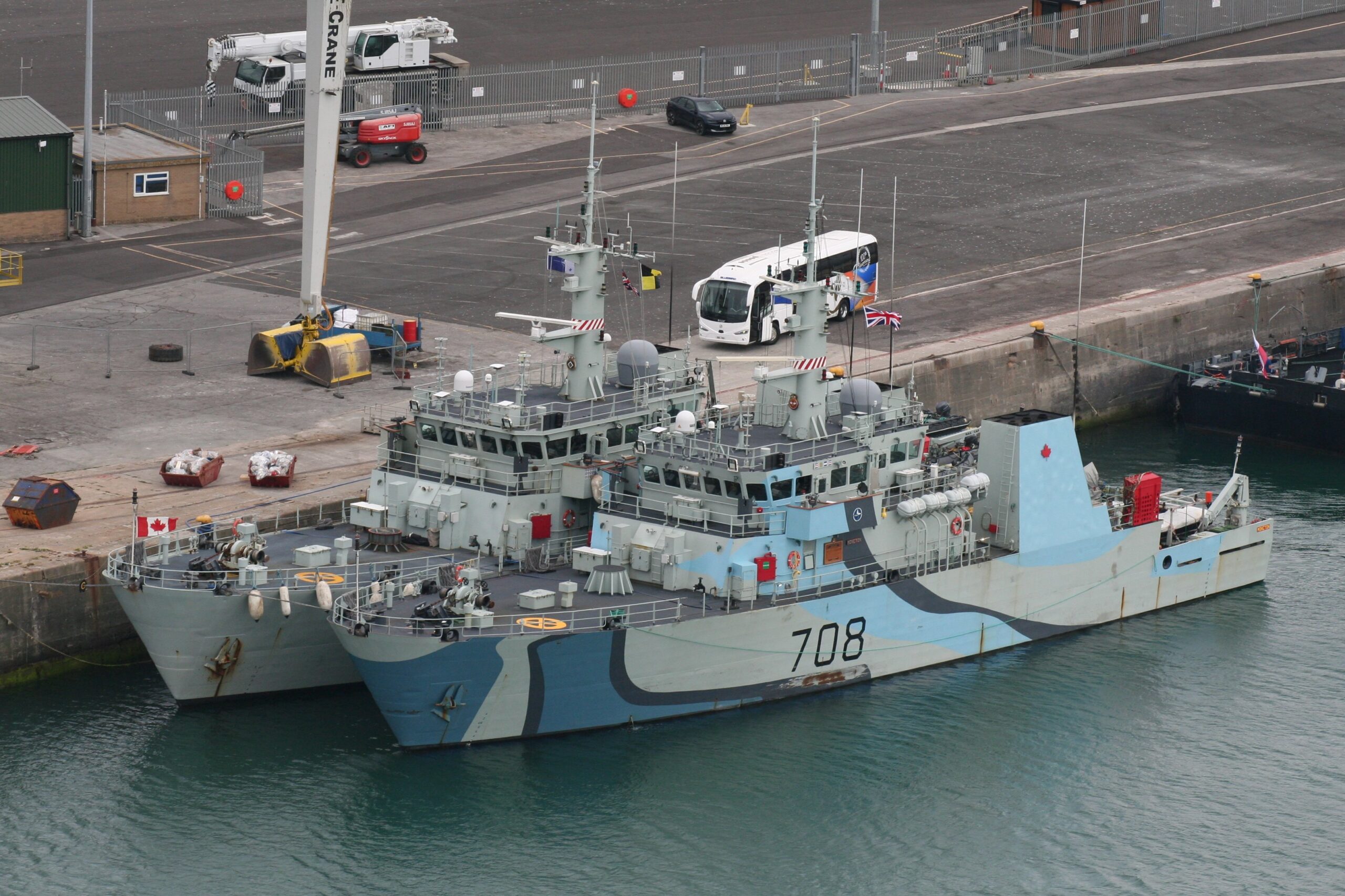
Canadian coastal defence vessels HMCS Moncton and HMCS Edmonton are currently operating in European waters as part of a NATO mine countermeasures mission, with a recent port call in Kirkwall, Orkney, underscoring efforts to protect critical subsea infrastructure amid heightened concerns over potential threats.
The Kingston-class Maritime Coastal Defence Vessels (MCDVs) departed their homeport of Halifax, Nova Scotia, on 7 July 2026. They joined Standing NATO Mine Countermeasures Group One (SNMCMG1) under Operation REASSURANCE, Canada’s longstanding contribution to NATO’s deterrence and defence posture in the Euro-Atlantic region. The deployment runs through October 2026.
Each ship carries a company of approximately 45 personnel, for a combined total of about 90 sailors. As multi-role coastal defence vessels, they are fitted with advanced mine countermeasure systems, including REMUS 100 Autonomous Underwater Vehicles for rapid environmental assessments and seabed surveys, plus Royal Canadian Navy clearance diving teams trained in detecting and neutralizing underwater threats such as historic sea mines.
Their work focuses on specialized mine countermeasure operations in strategically important waters. This includes promoting safe navigation, contributing to continuous NATO maritime presence and security, and protecting critical undersea infrastructure such as cables, pipelines, and interconnectors that carry data and energy relied upon by roughly a billion people across the Alliance.
In early August 2026, HMCS Moncton and HMCS Edmonton formed part of a four-ship NATO group that called into Kirkwall. The multinational unit, operating under NATO command, also included the Polish Navy’s ORP Mewa and the German Navy’s FGS Homburg. The ships conducted vigilance activities and patrols in waters near Orkney and across the GIUK (Greenland-Iceland-UK) gap. These efforts aim to maintain a clear picture of surface and subsurface activity in response to an increased threat of covert operations targeting subsea infrastructure.
After the Orkney visit, the group was scheduled to continue these patrols before participating in Exercise Northern Viking. FGS Homburg’s deployment details similarly noted planned involvement in Northern Viking and Joint Warrior, with operations primarily in the North Sea and North Atlantic.
Rear-Admiral Josée Kurtz, Commander of Maritime Forces Atlantic and Joint Task Force Atlantic, highlighted the significance of the mission: “NATO’s collective defence and international maritime security remain paramount to Canada and the continuing safety of our and Allied nations’ security. His Majesty’s Canadian Ships Moncton and Edmonton, deploying in support of Operation REASSURANCE, will not only showcase their professionalism and strengths but will also demonstrate the Royal Canadian Navy’s will to deliver excellence at sea in partnership with our Allies.”
Lieutenant-Commander Justin Wong, Commanding Officer of HMCS Moncton, emphasized crew cohesion: “What sets His Majesty’s Canadian Ship Moncton apart is the strength and cohesion of its crew. Every sailor brings a unique skill set, and it’s their collective effort, discipline, and trust in one another that enable us to succeed. As we deploy with Standing NATO Mine Countermeasures Group One, our team is ready to contribute meaningfully alongside our Allies and uphold the high standards expected of the Royal Canadian Navy.”
Lieutenant-Commander Michael Ronaldson, Commanding Officer of HMCS Edmonton, noted the preparation: “The crew of His Majesty’s Canadian Ship Edmonton has spent months preparing and training for Operation REASSURANCE, and I could not be prouder of the hard work they have put in as we begin this next chapter. As we join Standing NATO Mine Countermeasures Group One, our entire team stands ready to represent the Royal Canadian Navy and Canada while working in the European region.”
The Kingston-class vessels displace about 970 tonnes fully loaded, measure 55.3 metres in length with an 11.3-metre beam and 3.4-metre draught, and are powered by a diesel-electric system driving azimuth thrusters for a maximum speed of around 15 knots and a range of approximately 5,000 nautical miles at economical speeds. Designed for coastal surveillance, patrol, and modular mission payloads (including mine countermeasures), they have proven versatile in both domestic and international operations. Several of the original 12 ships in the class have already been paid off as the Royal Canadian Navy transitions its fleet, with Moncton and Edmonton among the remaining active units.
SNMCMG1 itself is one of NATO’s standing high-readiness maritime forces, providing continuous capability for mine countermeasures in peacetime and crisis while enhancing Allied interoperability. Canada has contributed ships to NATO’s Standing Naval Forces on a rotational basis for over a decade. Operation REASSURANCE, launched in 2014 in response to Russian actions in Ukraine, remains Canada’s largest overseas military commitment and spans land, air, and maritime domains.
The presence of the Canadian ships in northern European waters, including the recent stop in the Orkney Islands, illustrates both the practical utility of these smaller, specialized vessels and NATO’s broader focus on safeguarding the undersea domain that underpins modern economies and communications.