

In the frigid depths of international defence procurement, a fierce rivalry has emerged between South Korea and Germany as they compete to supply Canada with a new fleet of submarines. The Canadian Patrol Submarine Project (CPSP) aims to replace the Royal Canadian Navy’s aging Victoria-class submarines, acquired in the 1990s, with up to 12 advanced diesel-electric vessels capable of long-range patrols in the Atlantic, Pacific, and Arctic oceans. This multi-decade initiative, valued at up to 60 trillion South Korean won (approximately $44 billion USD), includes not just the initial procurement—estimated at $20-24 billion—but also 30 years of maintenance, repair, and operations. As of January 2026, with proposals due in March and a decision expected by May or June, both nations are pulling out all the stops, blending cutting-edge technology with promises of economic windfalls for Canada.
Canada’s Urgent Need for Modern Submarines
Canada’s current fleet of four Victoria-class submarines has been plagued by reliability issues, with only one often operational at a time. Purchased second-hand from the UK in the late 1990s, these subs are nearing the end of their service life, prompting the government to seek replacements that can handle extended underwater missions, including under-ice operations in the Arctic. The CPSP emphasizes stealth, endurance, and interoperability with NATO allies, while also prioritizing economic benefits like job creation and technology transfers to bolster Canada’s defence industry. In August 2025, Ottawa narrowed the field from six contenders to two: South Korea’s Hanwha Ocean-led consortium and Germany’s Thyssenkrupp Marine Systems (TKMS).
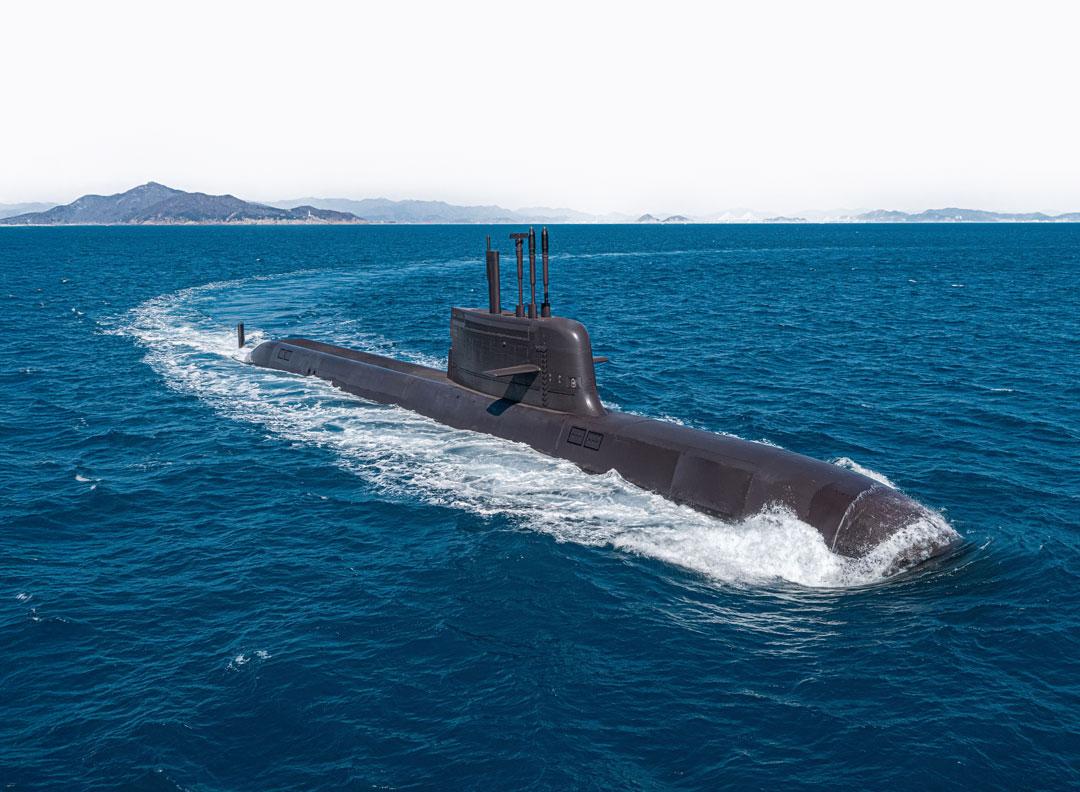
South Korea’s Bid: The KSS-III CPS Variant
South Korea, represented by a consortium spearheaded by Hanwha Ocean and supported by HD Hyundai Heavy Industries (HHI), is offering a customized version of its KSS-III submarine, dubbed the KSS-III CPS. Based on the KSS-III Batch II, this diesel-electric submarine features air-independent propulsion (AIP) using hydrogen fuel cells, allowing for prolonged submerged operations without surfacing. Hanwha promises delivery of the first submarine by 2032 and the initial four by 2035, leveraging an active production line for efficiency. The KSS-III is larger than its German counterpart, boasting a displacement of around 3,700 tons submerged and a range of approximately 10,000 nautical miles. It can fire torpedoes and submarine-launched ballistic missiles, making it a versatile platform for surveillance and deterrence.
South Korea’s pitch extends beyond the hardware. A high-level delegation, including Presidential Chief of Staff Kang Hoon-sik, Industry Minister Kim Jung-kwan, and Hyundai Motor Group Executive Chair Euisun Chung, visited Canada in late January 2026 to lobby for the deal. They signed multiple agreements, projecting the creation of 15,000 to 200,000 jobs in Canada by 2040 across sectors like shipbuilding, steel, AI, and clean energy. Notable commitments include a $275-345 million investment in Algoma Steel for a new structural steel beam mill in Sault Ste. Marie, Ontario, and partnerships with companies like Cohere for AI development and Telesat for satellite solutions. Hyundai is also exploring hydrogen infrastructure support, though no new auto plant is planned.
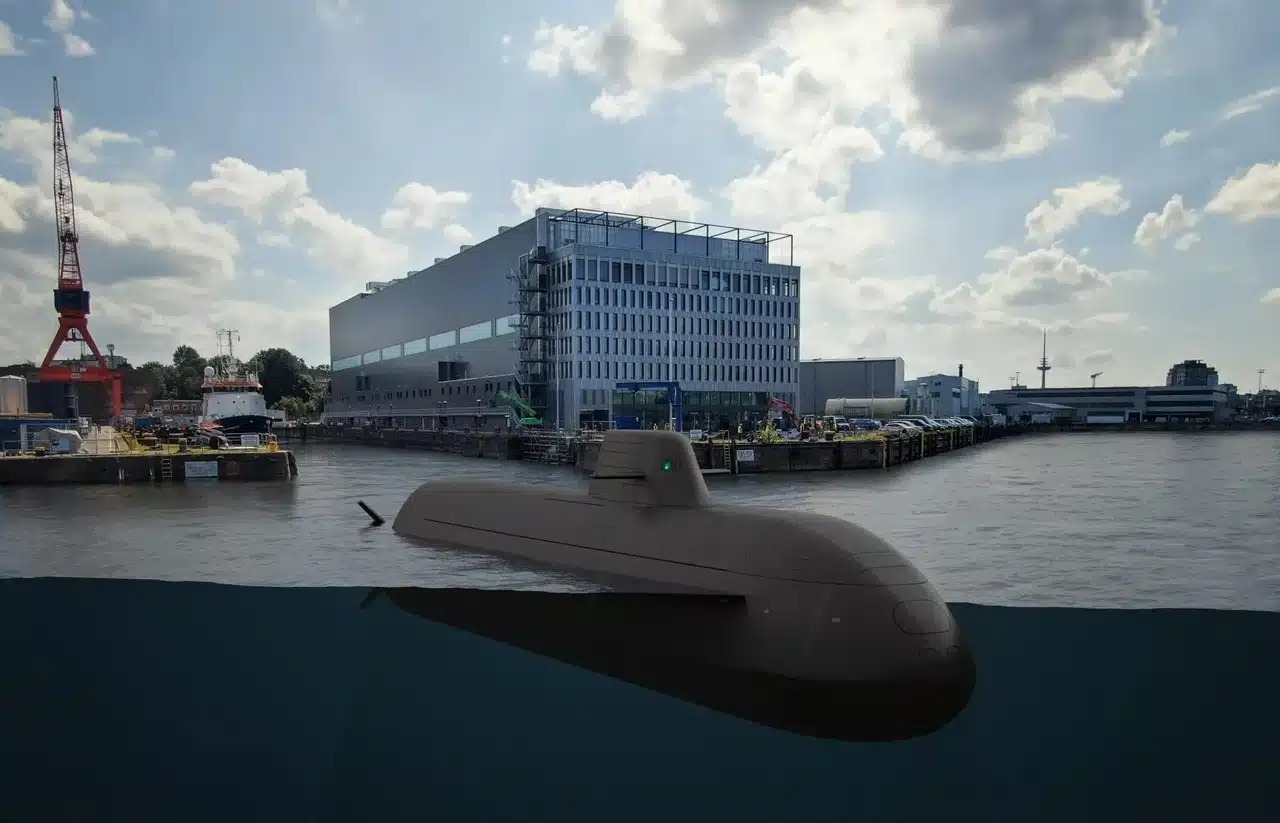
Germany’s Bid: The Type 212CD Class
Germany’s TKMS is countering with the Type 212CD submarine, a derivative of the proven Type 212A, optimized for harsh northern environments like the Arctic. This model, already in production for Norway and Germany with deliveries starting in 2029, features advanced hydrogen fuel cell AIP, lithium-ion batteries, and exceptional stealth—described by TKMS CEO Oliver Burkhard as “quieter than Canadian snowfall.” At 2,800 tons submerged and 73 meters long, it’s more compact than the KSS-III but boasts high endurance (around 41 days) and NATO interoperability, as TKMS supplies the majority of the alliance’s conventional subs. TKMS plans first deliveries to Canada between 2032 and 2033.
On the economic front, TKMS has signed agreements with Canadian firms like Seaspan Shipyard for maintenance facilities on both coasts and Marmen for manufacturing support. They’re also in talks for multi-billion-dollar investments in rare earths, mining, AI, and battery production, potentially tied to the automotive sector affected by U.S. tariffs. German officials, including Chancellor Friedrich Merz, hosted Canadian Prime Minister Mark Carney in Berlin in August 2025 to showcase the subs.
A Side-by-Side Comparison
The two submarines represent distinct design philosophies: the KSS-III emphasizes size and range, while the Type 212CD prioritizes stealth and cold-water optimization. Here’s a breakdown based on available specifications:
|
Feature
|
KSS-III CPS (South Korea)
|
Type 212CD (Germany)
|
|---|---|---|
|
Length
|
83.5 m
|
73 m
|
|
Beam
|
9.6 m
|
10 m
|
|
Displacement (Submerged)
|
3,700 tons
|
2,800 tons
|
|
Propulsion
|
Diesel-electric + Hydrogen Fuel Cell AIP
|
Diesel-electric + Hydrogen Fuel Cell AIP + Lithium-Ion Batteries
|
|
Top Speed (Submerged)
|
20 knots
|
20 knots
|
|
Range
|
~10,000 nautical miles
|
Unknown (~41 days endurance)
|
|
Armament
|
Torpedoes, submarine-launched missiles
|
Torpedoes, submarine-launched missiles
|
|
Key Strengths
|
Larger size for extended patrols, proven production speed
|
Superior stealth, Arctic optimization, NATO compatibility
|
Intense Lobbying and Broader Implications
The competition has intensified with both sides engaging in aggressive deal-making. South Korea’s January 2026 delegation signed six cooperation pacts, emphasizing pan-government support against “manufacturing powerhouse” Germany. TKMS, meanwhile, highlights its NATO ties and is exploring joint ventures with Norwegian firms. Canada’s evaluation criteria weigh the platform at 20%, local maintenance at 50%, economic benefits at 15%, and financial capacity at 15%. The federal government favours bids that boost jobs and sectors like automotive, amid U.S. trade tensions.
Additionally, South Korea recently approved an intelligence-sharing pact with Canada, potentially strengthening ties in defence research and operations. Hanwha has even launched a public ad campaign in Canada to build brand awareness.
A Pivotal Decision
As the March bid deadline approaches, this rivalry underscores the geopolitical stakes in defence procurement. For South Korea, winning would cement its status as a top global arms exporter; for Germany, it reinforces NATO’s supply chain dominance. Canada, meanwhile, must balance technological fit, cost, and economic gains. Whichever side prevails, the deal promises to reshape the Royal Canadian Navy’s capabilities for decades, ensuring sovereignty in increasingly contested waters.
