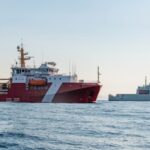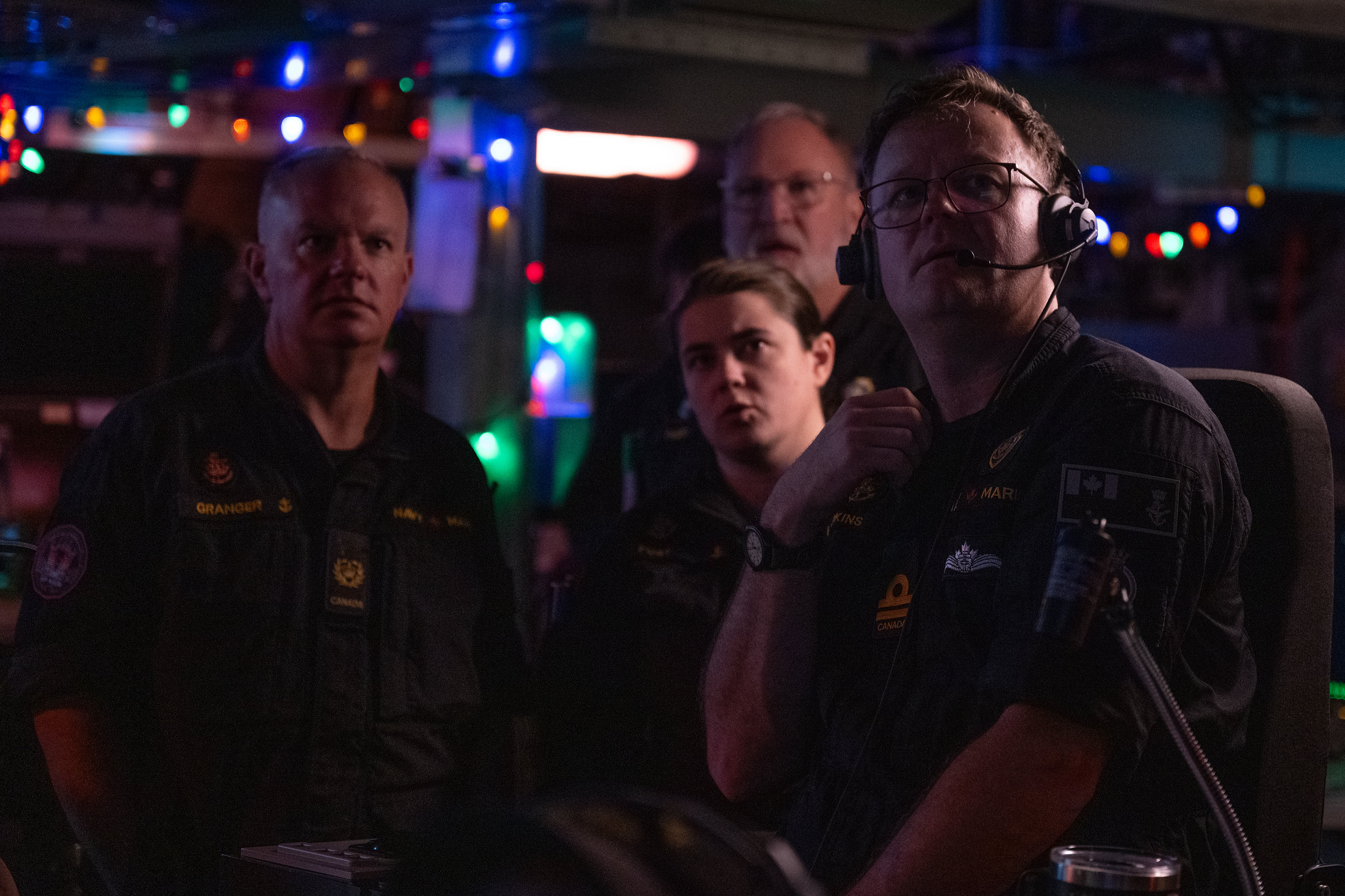
From late September to early November 2026, the Royal Canadian Navy’s Halifax-class frigate HMCS Regina conducted monitoring and surveillance operations against illicit maritime activities in waters surrounding Japan. This marked Canada’s 16th such vessel deployment since 2018 under efforts to uphold United Nations Security Council Resolutions (UNSCRs) targeting North Korea.
The mission focused on detecting and reporting suspected violations, particularly ship-to-ship (STS) transfers involving North Korean-flagged vessels. These transfers, often of refined petroleum products, coal, or other sanctioned commodities, are a primary method used to evade maritime restrictions designed to limit funding for North Korea’s nuclear weapons and ballistic missile programs.
Japan’s Ministry of Foreign Affairs and Ministry of Defense publicly welcomed the latest HMCS Regina deployment, issuing a press release noting that it supports the effective implementation of the resolutions “in solidarity with the international community toward the realization of North Korea’s dismantlement of all weapons of mass destruction and ballistic missiles of all ranges in a complete, verifiable, and irreversible manner.” Japan itself conducts parallel information-gathering activities on suspected violating vessels.
Japan Ministry of Foreign Affairs (November 19, 2026):
-
From late September to early November, Royal Canadian Navy Halifax-class frigate HMCS REGINA conducted monitoring and surveillance activities against illicit maritime activities, including ship-to-ship transfers with North Korean-flagged vessels prohibited by the United Nations Security Council resolutions (UNSCRs), in waters surrounding Japan. It was the sixteenth time for a Royal Canadian Navy vessel to engage in these activities since 2018.
-
Japan welcomes these activities from the viewpoint of ensuring effective implementation of the relevant UNSCRs in solidarity with the international community toward the realization of North Korea’s dismantlement of all weapons of mass destruction and ballistic missiles of all ranges in a complete, verifiable, and irreversible manner.
-
As Japan has also been conducting information-gathering activities on vessels suspected of violating the UNSCRs, Japan will continue to work closely with relevant countries and international organizations, including Canada.
Operation Neon: Canada’s Role in Sanctions Monitoring
Operation Neon is Canada’s contribution to a multinational effort supporting the implementation of UNSCRs adopted between 2006 and 2017. These resolutions aim to pressure the Democratic People’s Republic of Korea (DPRK) to abandon its weapons of mass destruction programs through economic isolation and maritime interdiction measures.
Canadian warships, CP-140 Aurora maritime patrol aircraft, and personnel periodically deploy to the Indo-Pacific to identify suspected sanctions-evasion activities. Information gathered is shared with partner nations, relevant countries, and international bodies. Partners in the broader effort include Australia, France, Germany, Italy, Japan, the Netherlands, New Zealand, the Republic of Korea, the United Kingdom, and the United States.
What the Surveillance Entails
During these missions, ships like HMCS Regina use radar, optical systems, drones, an embarked CH-148 Cyclone helicopter, and coordination with aircraft and allies to monitor vessel movements. Suspicious patterns, such as vessels loitering in open water, AIS (Automatic Identification System) gaps, unusual rendezvous, or transfers in high-risk areas, can indicate illicit STS activity. Imagery, position data, and other intelligence are collected and reported.
This recent deployment occurred as part of a broader Indo-Pacific presence under Operations Horizon and Neon. HMCS Regina participated in exercises including KAEDEX and Pacific Vanguard with forces from Japan, Australia, and the United States, conducted gunnery training against high-speed targets, and maintained readiness through damage-control drills. The ship is expected to return to its home port of CFB Esquimalt later in 2026.
Related posts:
High-Stakes Competition: South Korea and Germany Vie for Canada's Multi-Billion Dollar Submarine Con...
Progress of the Joint Support Ship Project: Building HMCS Protecteur and HMCS Preserver
South Korean Submarine Arrives in Esquimalt as Hanwha Showcases Bid for Canada’s New Sub Fleet