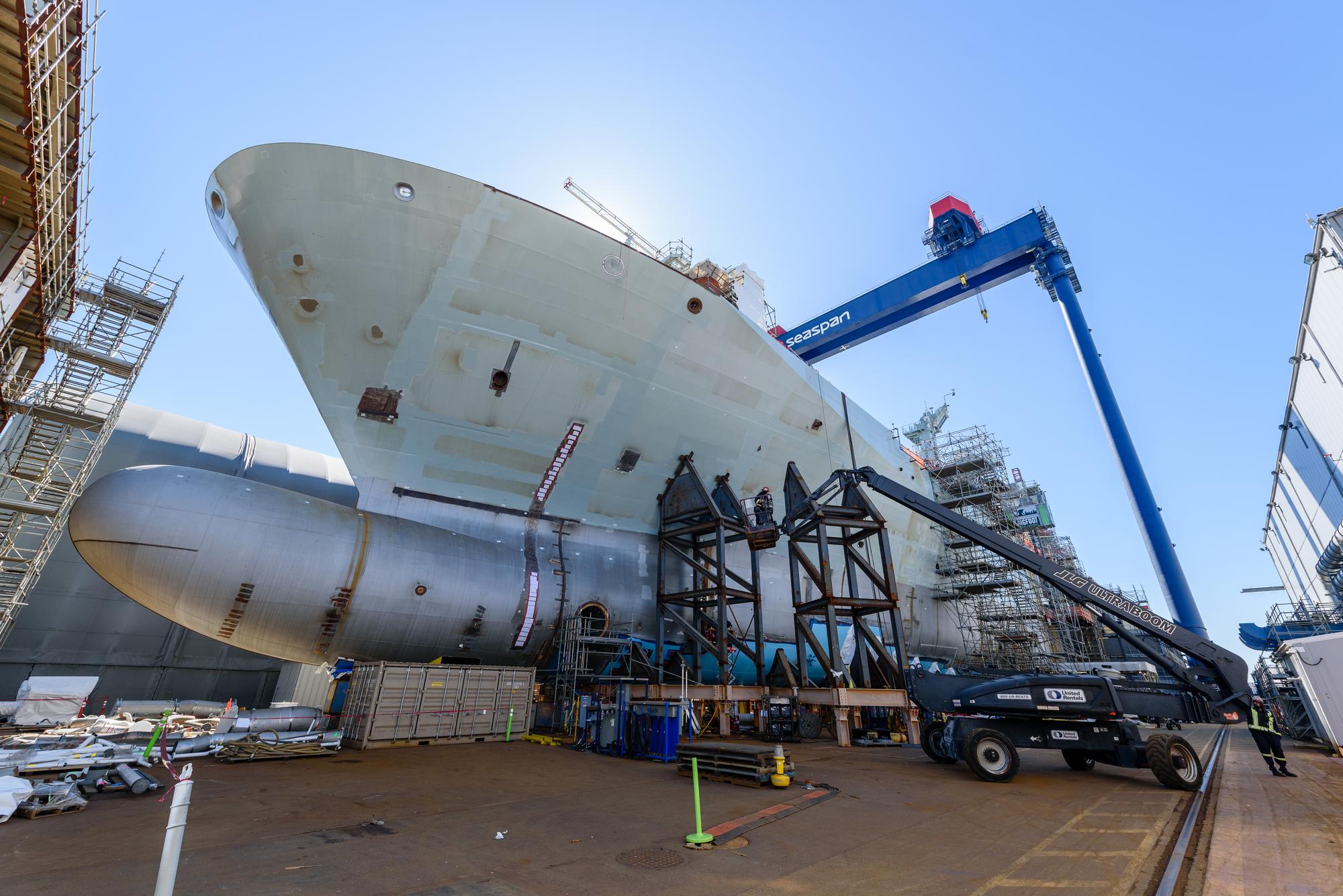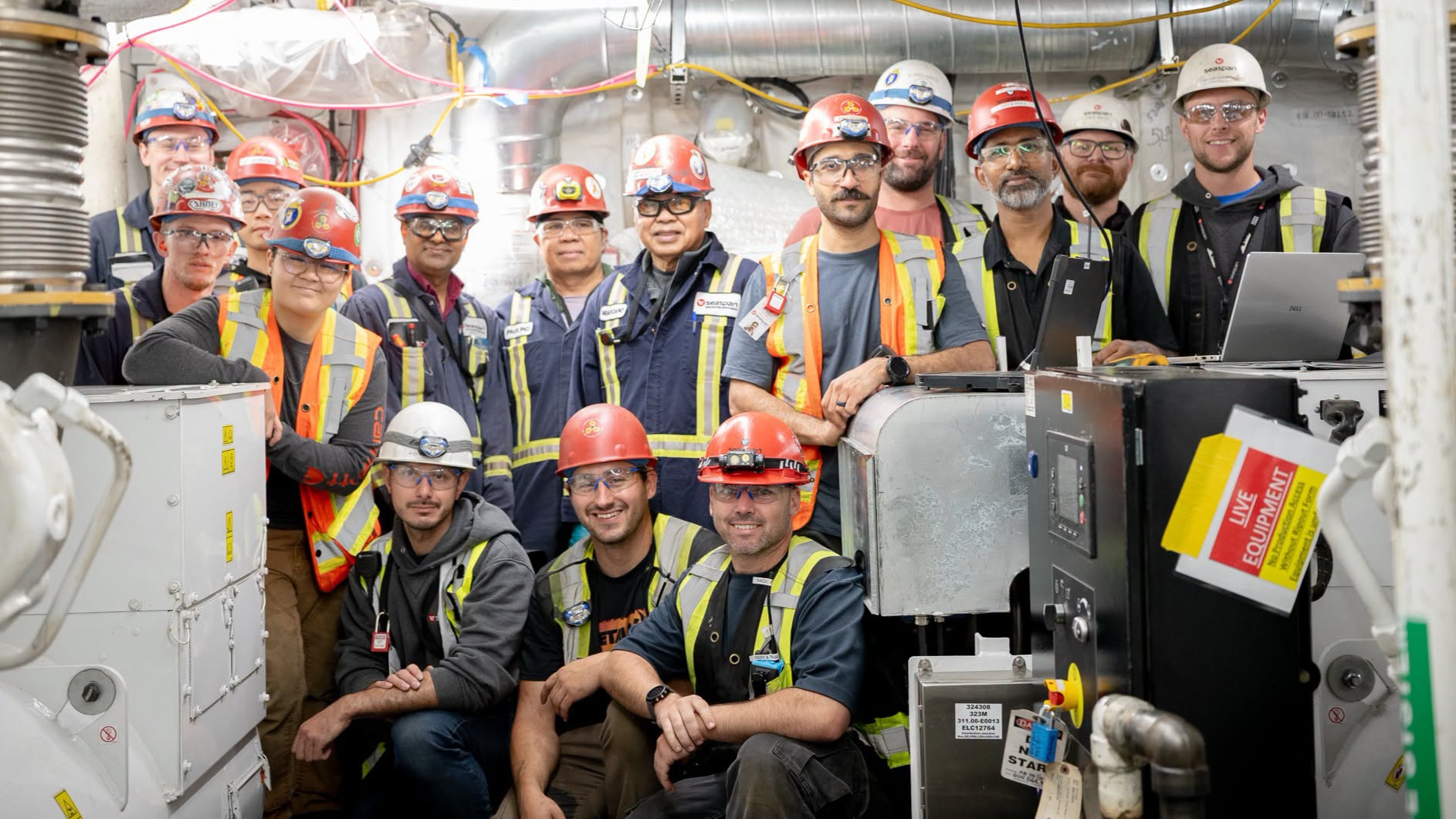
Vancouver, BC — In a significant step forward for Canada’s naval shipbuilding program, the team at Seaspan’s Vancouver Shipyards recently gathered aboard the future HMCS Protecteur to celebrate the successful activation of the ship’s main diesel generators. This “diesel generator light-off” marks a key milestone in the vessel’s commissioning and brings it one step closer to sea trials later this year.
The future HMCS Protecteur is the first of two Joint Support Ships (JSS) being built at Seaspan Vancouver Shipyards for the Royal Canadian Navy under the National Shipbuilding Strategy. With all four main diesel generators now online, the ship has achieved a critical level of self-sufficiency.
These generators supply electrical power for virtually every system aboard the ship, including communications and navigation equipment, replenishment at sea (RAS) operations, maneuvering systems, lighting, HVAC, and all other electrical needs throughout the vessel.
The only systems not directly powered by the main diesel generators are the main propulsion engines themselves, though even those rely on auxiliary systems (fuel oil, cooling water, compressed air, and exhaust) that are now supported by the generators and the main switchboards.
With this milestone complete, the future HMCS Protecteur can now operate independently of shore power, functioning as a self-contained “floating city” at sea.
“Accomplishing the diesel generator light-off is an outstanding achievement,” said Callum Vause, Director, JSS Delivery at Seaspan. “This is a real sign of the momentum beginning to build as we push toward sea trials.”
Achieving generator light-off also required the installation and commissioning of numerous supporting auxiliary systems, including fuel oil, cooling water, compressed air, exhaust systems, and the main switchboards. With these now online and tested, the Vancouver Shipyards team is preparing for the next major milestone: main engine light-off later this summer.
This sequence of power and propulsion milestones is essential preparation for the ship’s upcoming sea trials. Once the main engines are running and integrated, the vessel will be ready to put to sea for contractor sea trials, followed by acceptance trials with the Royal Canadian Navy.
The future HMCS Protecteur (JSS 1) and its sister ship, the future HMCS Preserver (JSS 2), represent Canada’s new generation of multi-role replenishment vessels. They will provide fuel, ammunition, supplies, aviation support, medical facilities, and other critical sustainment capabilities to Canadian and allied naval task groups.